


From the Field to the Dashboard – Built by Experts, for Experts.
Discover What's Really Happening in the Steel Industry
Use the AI-powered search engine to analyze production activity, market trends, and news faster than ever before.
Try the Free AI Search EnginePositive Market Outlook: Bosnia and Herzegovina’s Steel Industry Responds to Import Duty Announcement
Bosnia and Herzegovina’s steel market is experiencing a positive shift as the government plans to impose a temporary 30% import duty on steel and steel products, as outlined in “Bosnia and Herzegovina plans temporary 30% duty on steel imports“ and “Due to a sharp increase in supplies, Bosnia imposes protective duties on steel.” This decision directly correlates with recent satellite observations that show a downward trend in activity levels at local plants, a response to soaring imports from Serbia and Turkey that threaten local production stability.
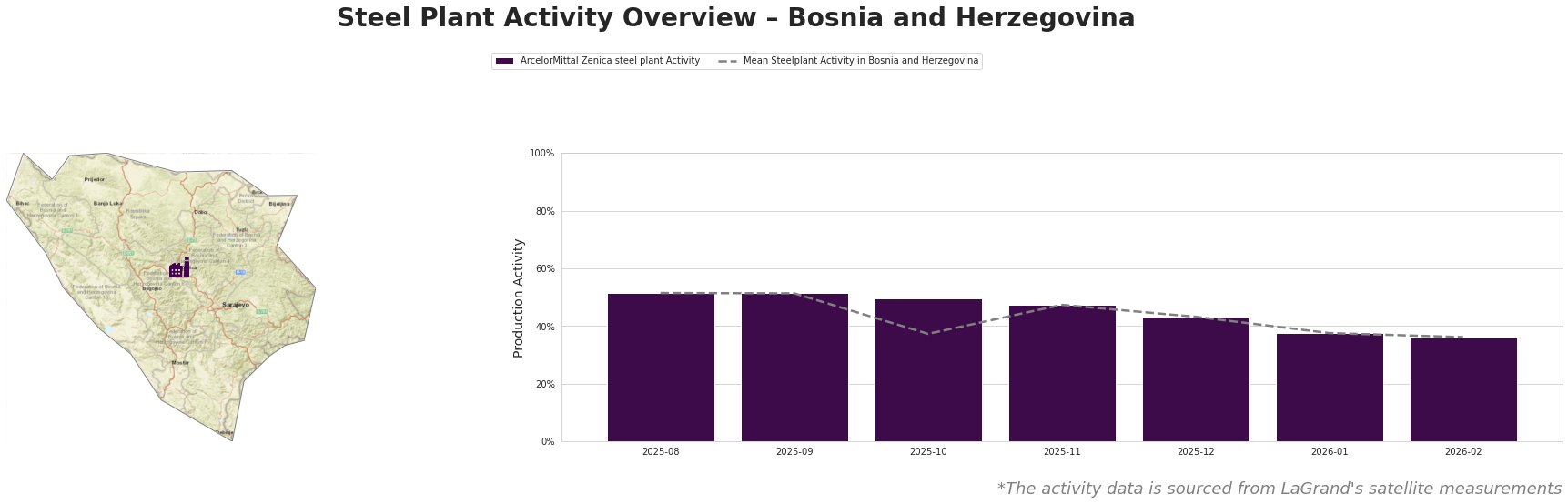
The ArcelorMittal Zenica steel plant, a pivotal facility with an annual crude steel capacity of 1.94 million tons, has shown fluctuating activity levels. Notably, its activity dropped from 50% in October to just 36% by February 2026, closely reflecting the mean market activity which also declined during this period. This decline can indirectly be linked to the rising import quantities articulated in the news articles, particularly the dramatic surge in imports of reinforcing mesh and rebar from Serbia and Turkey.
Considering the protective measures proposed by the government, steel buyers should anticipate potential supply disruptions due to these import duties incentivizing local production. Specifically, buyers are advised to secure procurement agreements with local suppliers, such as Zenica, to mitigate risks associated with foreign steel dependencies and potential upcoming supply chain constraints. Reports such as “Bosnia plans 30 percent tariffs on steel imports“ highlight government intervention as a critical step in stabilizing the domestic market, thereby enhancing opportunities for local steel product procurement.
In conclusion, while the market sentiment is currently positive due to protective tariffs, the observed reduction in activity levels at local plants suggests heightened vigilance is necessary for procurement strategies in response to these evolving market dynamics.