


From the Field to the Dashboard – Built by Experts, for Experts.
Discover What's Really Happening in the Steel Industry
Use the AI-powered search engine to analyze production activity, market trends, and news faster than ever before.
Try the Free AI Search EngineNeutral Sentiment Prevails in Asia’s Steel Market Amid Rising Costs and Variable Plant Activity
Steel activity in Asia has experienced fluctuations with recent reports reflecting the impact of rising production costs and geopolitical tensions. “European steel HRC import prices up amid limited supply, higher costs“ and “European domestic steel CRC, HDG prices still rising amid limited imports“ indicate that ongoing conflicts and increased freight costs have disrupted supply chains, influencing local demand for imported steel in Asia. Correspondingly, satellite data shows a drop in average steel plant activity from 39% in February to 32% in March, suggesting a cautious approach among producers amid these pressures.
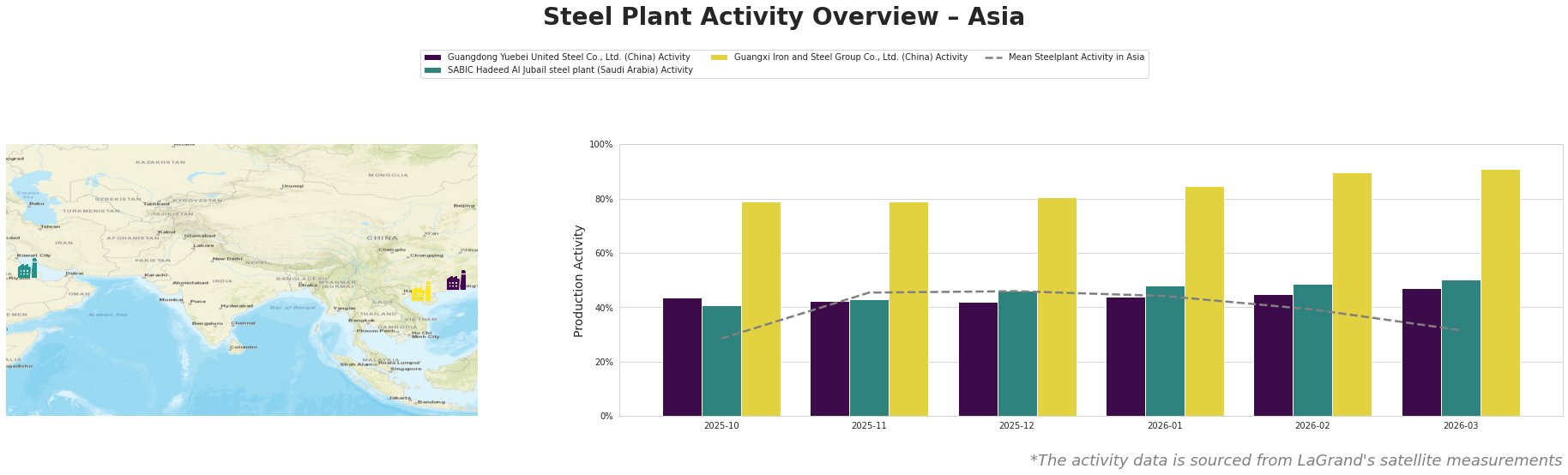
The Guangdong Yuebei United Steel Co., Ltd. has seen stable activity at 47% in March, recovering slightly from a dip in February. This aligns with the ongoing domestic demand reflected in the uptick of prices in Europe, as mentioned in “Romanian longs spot prices increase amid rising costs, firm import offers, low stocks“. Meanwhile, SABIC Hadeed Al Jubail exhibited a notable rise to 50%, possibly driven by a strategic shift towards fulfilling domestic needs in response to limited imports, while Guangxi Iron and Steel Group has reached a high of 91%, suggesting strong operational capacity amidst rising demand for finished products.
The convergence of rising geopolitical tensions and limited supply underscores the potential for disruptions in the Asian steel supply chain. Steel buyers should be vigilant about procurement strategies, particularly favoring local purchases or securing contracts with reliable local producers such as Guangdong Yuebei and SABIC Hadeed, given their current operational capacity. Additionally, contracts should include considerations for potential price adjustments linked to rising costs stemming from increased geopolitical tensions and supply constraints, as highlighted in recent news articles.