


From the Field to the Dashboard – Built by Experts, for Experts.
Discover What's Really Happening in the Steel Industry
Use the AI-powered search engine to analyze production activity, market trends, and news faster than ever before.
Try the Free AI Search EngineNegative Trends in European Steel Production: Insights from Recent Activity and Industry Developments
European steel production is facing challenges as Sweden reports significant declines in output, notably in the article “Swedish output declines, SSAB to replace key bridge“, where crude steel production fell by 3.2% in November 2025 compared to the previous year. Furthermore, this decline is reflected in the activity levels at key steel plants, with satellite data indicating reduced operational capacity.
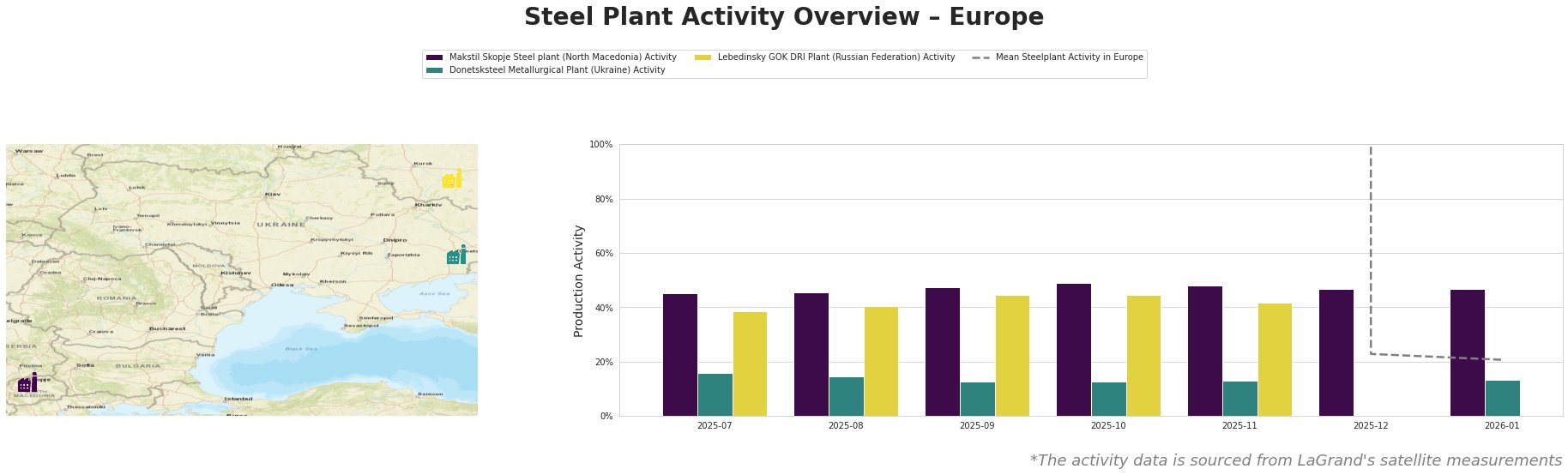
Makstil Skopje in North Macedonia has maintained an average of 45-49% activity, a relatively stable level but far below the mean, suggesting potential inefficiencies. The data do not indicate any strong relations to recent news.
The Donetsksteel Metallurgical Plant in Ukraine shows a concerning trend, with activity recorded at only 16-13%, indicating limited operational capacity. Given the geopolitical tensions affecting Ukraine, the lack of a direct correlation to Swedish production declines is noted.
The Lebedinsky GOK DRI Plant in Russia has also reported reduced operational activity within the 39-44% range, which aligns with overall declining European steel trends but lacks direct linkage to the Swedish output reductions.
Evaluated Market Implications
Current trends indicate potential supply disruptions from reduced Swedish production, specifically from SSAB, which impacts logistics due to infrastructure improvements like the planned bridge replacements. Steel buyers should prepare for potential delays and recommend securing supplies from more stable plants or regions, notably considering Makstil Skopje’s relatively higher activity levels. Given current geopolitical conditions, it would be prudent for firms to reassess procurement strategies and diversify supply sources away from high-risk areas like Ukraine.