


From the Field to the Dashboard – Built by Experts, for Experts.
Discover What's Really Happening in the Steel Industry
Use the AI-powered search engine to analyze production activity, market trends, and news faster than ever before.
Try the Free AI Search EngineNegative Sentiment in Asia’s Steel Market Amid Freight and Energy Supply Disruptions
Activity levels at key steel plants in Asia have significantly declined, reflecting a negative market sentiment primarily driven by disruptions in energy supply and freight logistics. Notably, the Freight issues disrupt Indonesian coal market have caused operational challenges, directly affecting vessel availability and increasing shipping costs. Furthermore, the LNG disruptions drive enquiries for Australian coal amidst geopolitical tensions have amplified concerns for energy sourcing, indirectly impacting steel production.
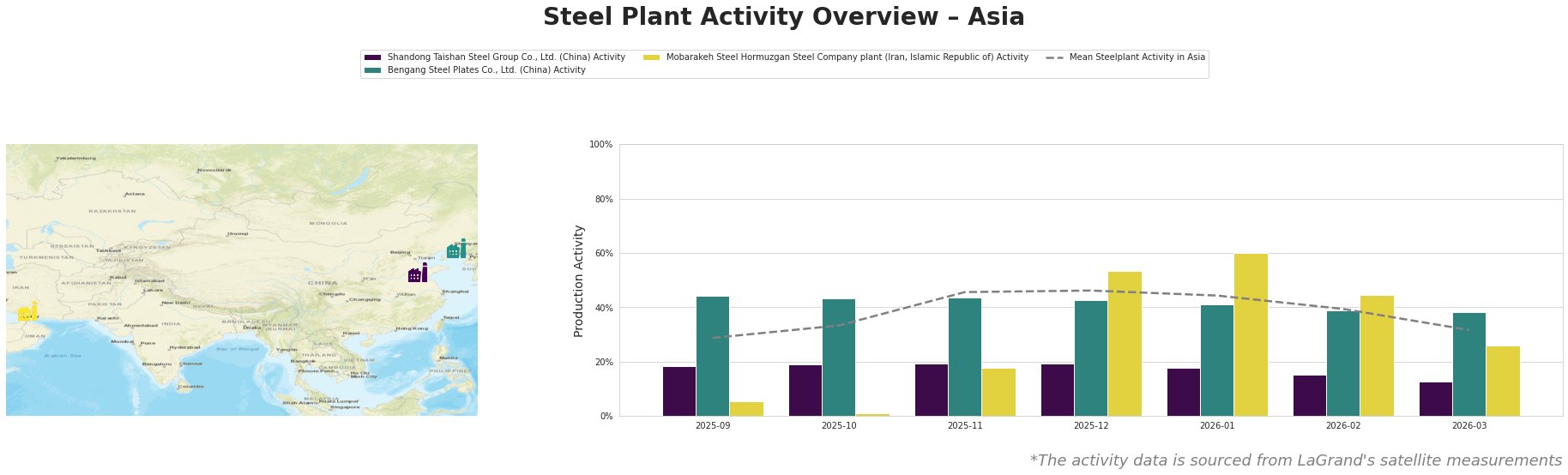
Activity levels of Shandong Taishan Steel Group Co., Ltd. saw a sharp decline to 13% by March 2026, suggesting operational cutbacks amidst tightening energy supplies. No direct correlation with recent news can be established; however, the company’s activity has consistently remained below the Asian mean of 32%. Bengang Steel Plates Co., Ltd. has also experienced a slight decrease to 38%, indicative of a concerning trend, though tied causally unclear.
In contrast, Mobarakeh Steel Hormuzgan Steel Company was notably fluctuating, peaking at 60% in January 2026, which may have benefitted from stable sourcing aligned with rising operational demand, yet dropped to 26% by March. The Iran conflict, indirectly affecting regional energy pricing, might connect herein, though explicit linkage remains to be seen.
The deteriorating activity parameters reflect a concerning trend influenced by Freight issues and escalating LNG disruptions, where increased costs compromise procurement strategies and operational viability.
Potential disruptions in supply chains are evident, especially in Indonesia where coal sourcing is challenged by tanker unavailability. Buyers are advised to secure contracts proactively, particularly with Australian coal suppliers as their production permits immediate responses to market demands, especially for thermal coal. Including 400,000 tons in Taiwan’s procurement plan between June and August highlights the urgency and shifting dynamics.
Actively monitoring site-specific demands and procurement timelines is essential to mitigate risks associated with the ongoing geopolitical uncertainties affecting energy prices and freight availability.