


From the Field to the Dashboard – Built by Experts, for Experts.
Discover What's Really Happening in the Steel Industry
Use the AI-powered search engine to analyze production activity, market trends, and news faster than ever before.
Try the Free AI Search EngineMajor Downturn in Asia’s Steel Market Amid Escalating Middle Eastern Tensions
Recent developments in Asia’s steel market have been deeply impacted by geopolitical tensions, particularly surrounding the Middle East. Significant reductions in activity levels at key steel plants have been observed, notably following reports such as “Iran rejects US talks as conflict widens“ and “Iran’s president says mediation underway to end war,” which provide insight into rising oil prices and instability affecting the industry. These articles correlate with a marked decline in operational capacity, linking deterioration in market conditions with increased global commodity prices and supply chain disruptions.
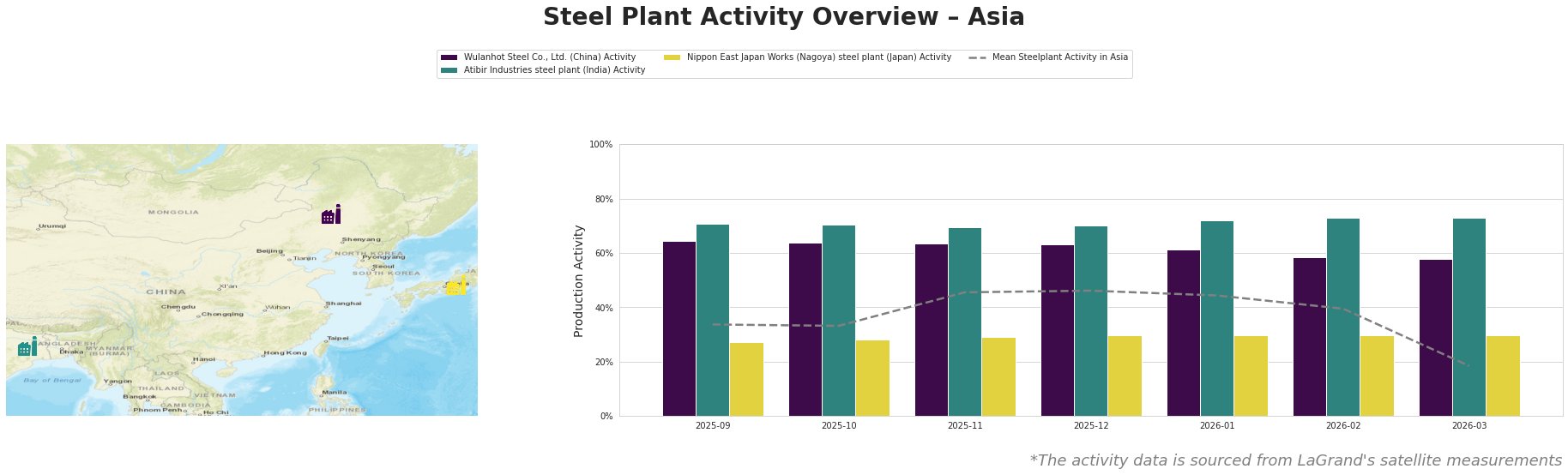
The Wulanhot Steel Co., Ltd. in Inner Mongolia demonstrated a decrease from 61% to 58% in activity between January and March 2026. This drop aligns with disruptions in the oil markets highlighted in the article “Iran says to halt strikes on neighbours unless attacked,” signaling a broader industrial impact. With its integrated processes and significant output for the building sector, any ongoing instability could further exacerbate this drop.
At the Atibir Industries steel plant in Jharkhand, activity has remained stable at 73%, yet no direct correlation with current geopolitical events can be firmly established. This indicates a segment of the market possibly less affected by regional turbulence but requires monitoring as supply competencies could change.
Conversely, the Nippon East Japan Works (Nagoya) experienced a drastic decline from 30% in December to 30% in March, potentially signaling market stagnation. Despite being a major player in the automotive and infrastructure sectors, intermittent supply threats due to Middle Eastern tensions could supply-chain instability, necessitating close scrutiny.
As geopolitical tensions and oil price volatility escalate, potential supply disruptions are evident, particularly at the Wulanhot Steel Co., Ltd. Procurement professionals should:
- Consider alternative sourcing strategies for materials typical of regions affected by instability, primarily from facilities like Wulanhot, as they are susceptible to broader economic pressures.
- Monitor oil prices closely as they further impact overall steel production costs, aligning purchasing strategies with anticipated market fluctuations.
- Maintain diversified supply chains within regions less impacted by geopolitical uncertainties to buffer against potential disruptions.
In light of the very negative sentiment pervading the steel market, especially in China, proactive procurement strategies are crucial to mitigate risks and capitalize on forthcoming opportunities in a turbulent market landscape.