


From the Field to the Dashboard – Built by Experts, for Experts.
Discover What's Really Happening in the Steel Industry
Use the AI-powered search engine to analyze production activity, market trends, and news faster than ever before.
Try the Free AI Search EngineKuwait Steel Market Faces Severe Disruption Amid Middle Eastern Conflict
Ongoing geopolitical tensions in the Middle East have created a very negative market outlook for Kuwait’s steel industry. The news article “Kuwait cuts crude output after Hormuz disruption“ highlights a reduction in oil output and refinery operations by KPC, attributed to halted oil exports through the critical Strait of Hormuz, which directly affects industrial operations, including steel production. This disruption correlates with significant changes in satellite-observed activity levels at local steel plants, reinforcing the negative market sentiment.
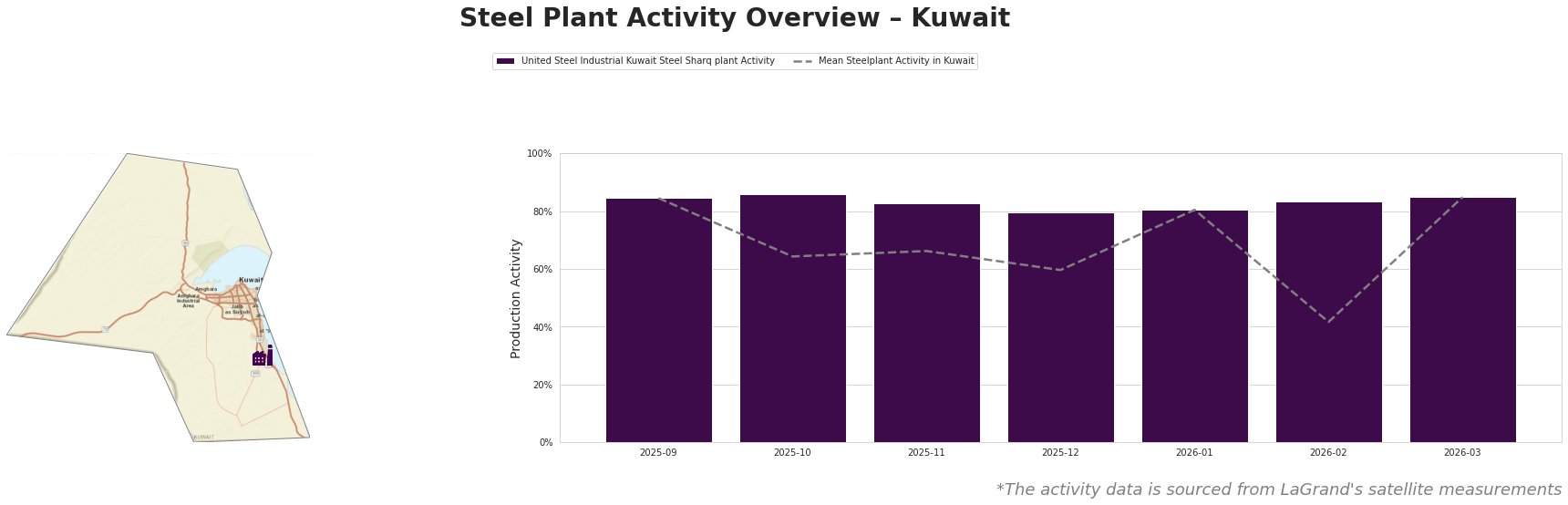
The mean activity level exhibited notable fluctuations, dropping to 42% in February 2026 before rebounding to 85% by March. The United Steel Industrial Kuwait Steel Sharq plant demonstrated resilience, maintaining activity levels above 80% for most months, but the decline to 42% in February is concerning. This drop is potentially linked to the broader disruptions in crude oil supply detailed in the “Kuwait cuts crude output on Hormuz disruption: Update“ article, which may have hindered access to necessary resources and affected operational schedules. However, the subsequent recovery in March does not establish a direct correlation to the broader supply constraints mentioned, leaving open questions about the sustainability of this rebound.
The United Steel Industrial Kuwait Steel Sharq plant operates with a capacity of 1,200 tonnes of crude steel, utilizing Electric Arc Furnace (EAF) technology, and produces various categories including rebar and billet. Despite the challenging market environment, the plant was able to maintain decent activity levels, showing stable performance at 85% in March 2026. This resilience may be due to strategic adjustments to meet domestic demand under uncertain conditions, as detailed in the “Kuwait’s KPC rolls over March sulphur price“ article, which highlights how the ongoing conflict has affected the production of sulphur and crude outputs.
Given these observations, potential supply disruptions could arise from ongoing tensions leading to risks associated with oil supply chains, thus impacting operational capacities for local steel manufacturers. For steel buyers and market analysts, it is advisable to:
- Monitor the geopolitical climate: Due to recent conflicts affecting major shipping routes, adjust procurement forecasts accordingly.
- Secure alternative supply options: Engage with suppliers to explore stable sources should disruptions persist, particularly for critical raw materials influenced by oil supply.
- Assess local plant output capabilities: Given the variability in production levels, maintain flexibility in contracts to adapt to changing circumstances in steel availability.
The current landscape underscores the necessity for proactive measures to safeguard supply lines while recognizing the interconnected nature of geopolitical events and industrial production amid instability in the Gulf region.