


From the Field to the Dashboard – Built by Experts, for Experts.
Discover What's Really Happening in the Steel Industry
Use the AI-powered search engine to analyze production activity, market trends, and news faster than ever before.
Try the Free AI Search EngineIran Steel Market Update: Activity Levels Decline Amid Increased Strait Traffic and Regional Tensions
In the Islamic Republic of Iran, recent geopolitical developments have influenced market dynamics, particularly concerning steel production and shipping. The article “Strait of Hormuz traffic increases but remains low“ indicates slight increases in maritime traffic, notably with the transit of friendly vessels. However, warehouse activity at key steel plants shows a definitive downturn, linking concerns from these developments directly to steel production challenges.
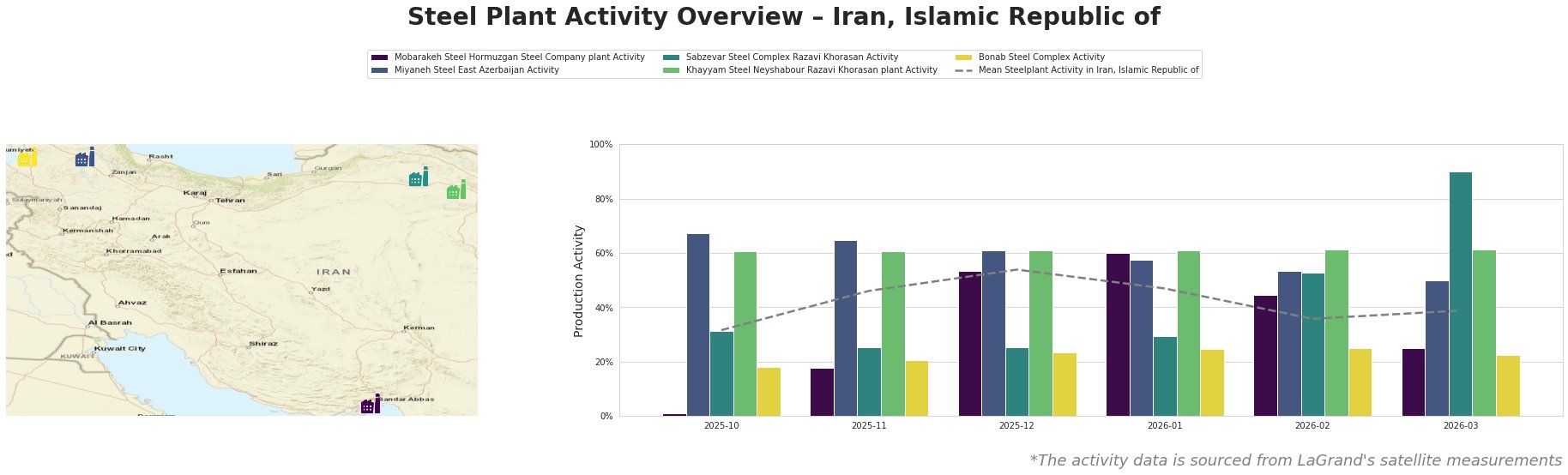
The Mobarakeh Steel plant faces significant challenges, as evidenced by a drop to 25% activity in March 2026, a substantial decline compared to previous months. This decline correlates with the announcement in “Iran turns back 3 ships trying to transit Hormuz: IRGC,” which indicates heightened scrutiny and aggressive regulatory activities by the Iranian Revolutionary Guard Corps (IRGC), possibly impacting logistics and supply chains for raw materials.
In contrast, the Miyaneh Steel plant displays a dramatic increase to 90%, indicating a potential capability to capitalize on market demands amidst the region’s logistical challenges. The rise may reflect strategic investments in production and sourcing, although no direct news references tie this shift to observed geopolitical changes.
The Sabzevar and Khayyam plants maintained stable activity levels at 61%, which may signify resilience during current tensions. Conversely, the Bonab Steel Complex remains untracked in the latest data but has historically aligned closely with regional steel supply trends.
The implications for procurement and supply continuation are critical. Steel buyers should prioritize sourcing from plants with stable or increasing production, such as Miyaneh, while closely monitoring logistics through the Strait of Hormuz. Notably, actions surrounding Iran’s imposition of transit fees discussed in articles like “Iran’s Hormuz transit fee illegal: GCC“ highlight that potential legal and regulatory challenges could further complicate shipments, elevating shipping costs and leading to supply disruptions.
In summary, procurement professionals are advised to consider alternative sourcing strategies from producers demonstrating resilient activity levels while remaining attuned to geopolitical developments affecting the iconic Strait of Hormuz to mitigate risk effectively.