


From the Field to the Dashboard – Built by Experts, for Experts.
Discover What's Really Happening in the Steel Industry
Use the AI-powered search engine to analyze production activity, market trends, and news faster than ever before.
Try the Free AI Search EngineEuropean Steel Market Outlook: Gradual Recovery and Pricing Dynamics Amid Regulatory Adjustments
European steel producers are witnessing a cautiously optimistic sentiment, largely influenced by recent developments in market demand and regulatory frameworks. Specifically, the news articles “Prices for Italian tableware continue to rise“ and “European long steel round-up: domestic rebar prices stable on subdued demand“ hint at an evolving landscape, although overall activity levels remain in flux. The shift in trading patterns aligns with declining inventories, as observed in satellite data from select plants.
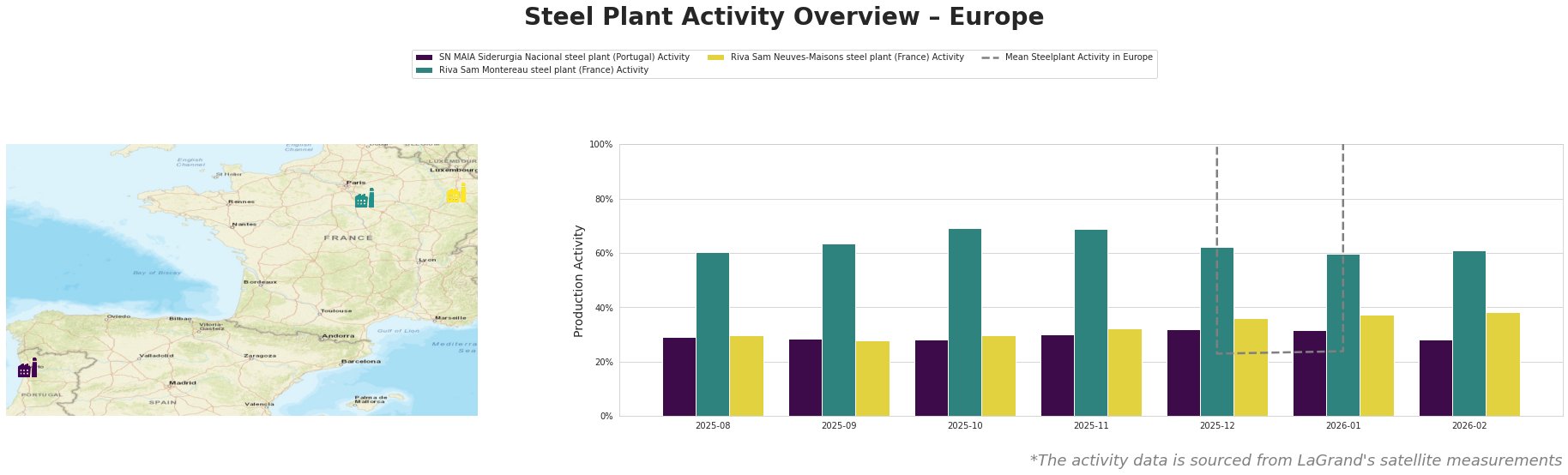
SN MAIA Siderurgia Nacional in Portugal displayed variable activity, averaging 29% over the past months, yet saw a notable shift to 32% in December. This rise aligns with “Prices for Italian tableware continue to rise,” indicating a correlation between inventory adjustment and rising demand in Italy. However, a drop to 28% was recorded in February, suggesting insufficient purchase activity.
Riva Sam Montereau plant maintained a relatively high activity level, reaching 69% in both October and November, despite the overall market slowdown. This plant produced a variety of rolled products, which could be a strategic advantage as buyers adopt a wait-and-see approach amid regulatory transitions.
Conversely, Riva Sam Neuves-Maisons observed its peak activity of 38% in February, indicating resilience despite sluggish demand conditions referenced in “European long steel round-up: domestic rebar prices stable on subdued demand.”
The current landscape suggests potential supply disruptions linked to the Carbon Border Adjustment Mechanism (CBAM), particularly affecting imports from regions like Turkey and Algeria, as seen in “Prices for Italian tableware continue to rise.” Steel buyers should prioritize local suppliers to mitigate risks associated with fluctuating import dynamics and rising costs attributable to new regulations.
In summary, procurement strategies must adapt by focusing on domestic suppliers to capitalize on favorable pricing dynamics as noted in recent activity trends. Furthermore, buyers should remain vigilant regarding upcoming regulatory impacts, adjusting stock levels in anticipation of market shifts.