


From the Field to the Dashboard – Built by Experts, for Experts.
Discover What's Really Happening in the Steel Industry
Use the AI-powered search engine to analyze production activity, market trends, and news faster than ever before.
Try the Free AI Search EngineDisruptive Forces: Asia’s Steel Market Faces Severe Activity Decline Amid Escalating Geopolitical Tensions
Recent developments in Asia’s steel market signal a troubling trend as geopolitical conflicts escalate, particularly following the article “Ship targeted off Kuwait as vessel attacks widen.” This situation has reverberated through the maritime sector, reflected by significant activity drop-offs in leading steel plants. For example, the “Hormuz ship traffic down 94pc since Iran conflict began“ underlines the sharp decline in shipping through a critical trade route, impacting raw material supply chains essential for steel production. The observed activity deviations in major plants such as Guangdong Jingye Iron and Steel Co., Ltd., JSPL Chhattisgarh, and Cangzhou China Railway Equipment Manufacture Material Co., Ltd. link directly to these external pressures.
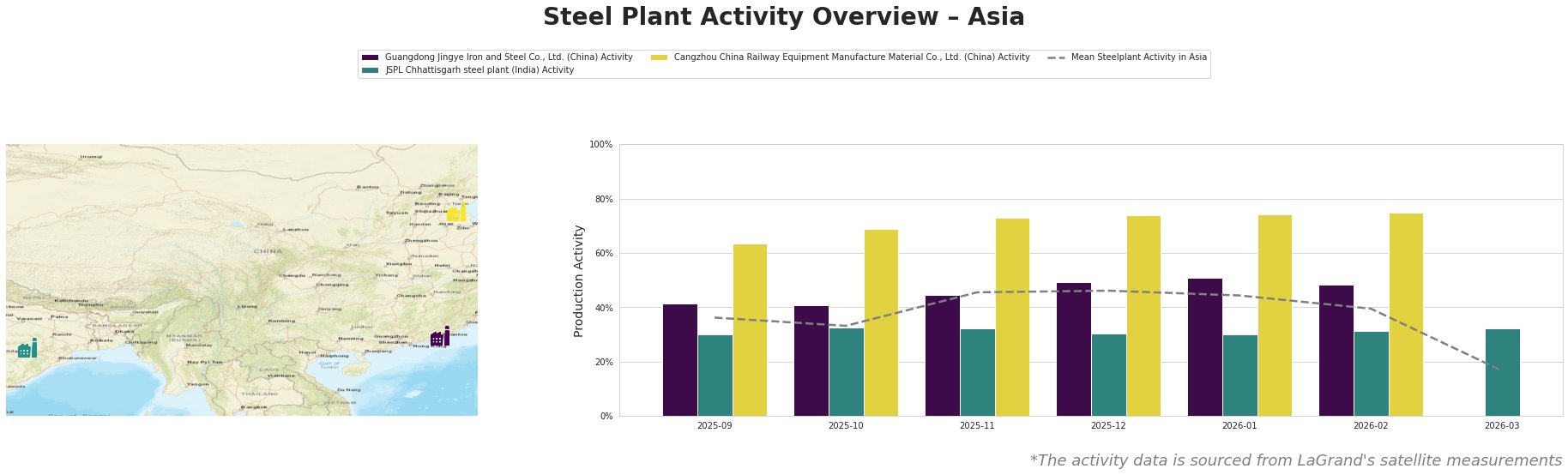
In March 2026, the mean activity level plummeted to 17%, down from 40% in February, indicating an extraordinary contraction. Notably, Guangdong Jingye Iron and Steel maintained a relatively high activity level until March, where it ceased reporting data, possibly indicating severe disruptions tied to geopolitical tensions highlighted in the articles.
Guangdong Jingye Iron and Steel Co., Ltd. (Guangdong, China) has observed a significant transition from 51% in January to a complete halt in March, impacted by fears surrounding shipping routes exacerbated by events such as “Incident update: Projectiles hit ships near Strait of Hormuz” which signals a dramatic risk environment affecting all industrial logistics.
JSPL Chhattisgarh (Chhattisgarh, India) saw a slight decline in activity from 31% in February to 32% in March, suggesting better resilience compared to others, reflecting potentially intact supply sourcing arrangements. However, it remains highly susceptible to shifts in raw material availability as tensions persist.
Conversely, Cangzhou China Railway Equipment Manufacture Material Co., Ltd. did not report data for March, reiterating concerns raised by “Hormuz ship traffic down 94pc since Iran conflict began,” as the maritime disruptions directly hinder sourcing viability and logistics capability.
The confluence of reduced shipping traffic and heightened conflict risk portends potential supply interruptions across the region. For procurement professionals, immediate actions should include:
- Supplier Diversification: Avoid reliance on affected shipping routes or suppliers.
- Inventory Management: Increase stock levels to mitigate immediate disruptions, especially before anticipated conflict escalations.
- Maritime Risk Assessment: Conduct thorough evaluations of potential suppliers’ supply chains, focusing specifically on those tied to the Strait of Hormuz.
In summary, the outlook for the Asian steel market remains overwhelmingly negative, creating challenges and necessitating proactive measures tailored to address these pressing dynamics amid escalating geopolitical uncertainties.