


From the Field to the Dashboard – Built by Experts, for Experts.
Discover What's Really Happening in the Steel Industry
Use the AI-powered search engine to analyze production activity, market trends, and news faster than ever before.
Try the Free AI Search EngineDeclining Steel Activity Trends in Asia Amid Global Market Crisis
Amid a deepening crisis, Asia’s steel market faces considerable challenges, underscored by the article “Czech steel industry struggles to escape ongoing deep crisis“. Observations from satellite data reflect a significant drop in operational levels at key steel plants throughout the region, aligning with broader trends noted in the steel output reductions in Europe.
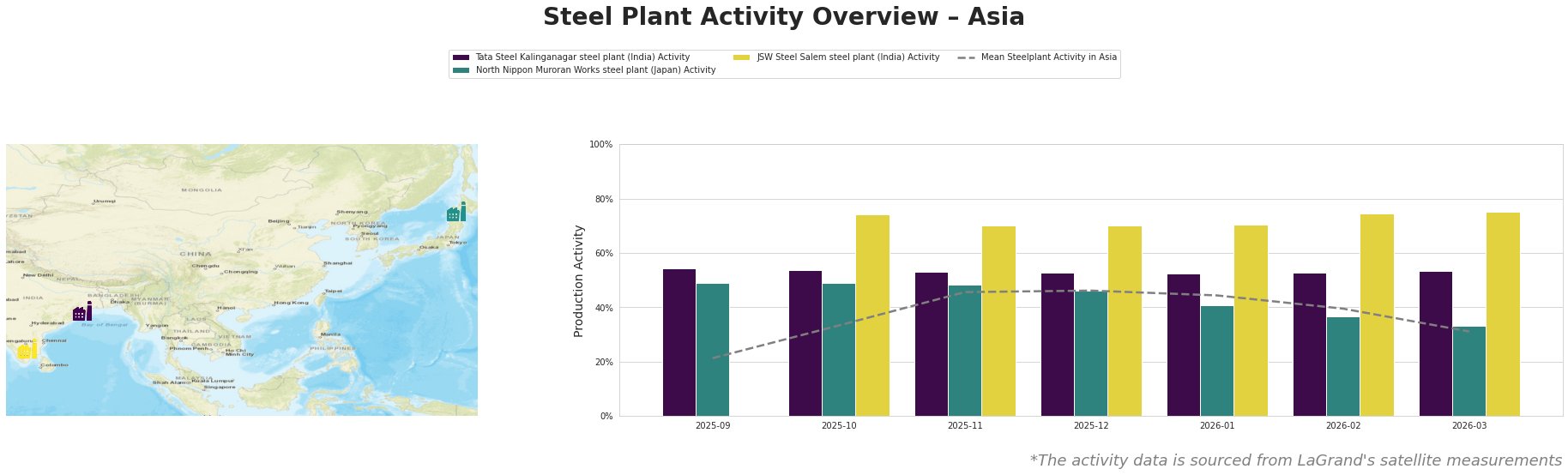
Tata Steel Kalinganagar, maintaining at 53% capacity across the observed timeline, shows stability amidst market turmoil, but overall activity levels are low given the mean of 31%. North Nippon Muroran Works has seen fluctuations but declined to 33% by March 2026, correlating with global market downturns as stated in “European steel production hits historic low.” JSW Steel Salem experienced slight increases, peaking at 75% in February 2026, yet remains vulnerable to the impacts described in the news articles, related to high energy costs and import pressures.
Steel consumption growth in the region may not signal genuine recovery, reinforced by “Eurofer forecasts EU steel consumption growth of 1.3% in 2026“ which attributes expected increases to a low prior base rather than sustained demand.
Supply disruptions are evident, particularly for plants like North Nippon Muroran Works, where production remains low, and procurement professionals should consider diversifying sourcing strategies to mitigate risks linked to these declining activity levels.
Specifically, buyers should explore securing contracts and options with JSW Steel Salem, given its maintained operational capacity and product diversity, especially as demand may pivot towards stable suppliers amid crisis conditions exacerbated by ongoing pressures identified in regional production activities.