


From the Field to the Dashboard – Built by Experts, for Experts.
Discover What's Really Happening in the Steel Industry
Use the AI-powered search engine to analyze production activity, market trends, and news faster than ever before.
Try the Free AI Search EngineDeclining Steel Activity in Mexico Signals Caution for Buyers Amid Global Economic Headwinds
Mexico’s steel industry is facing significant challenges, with satellite-observed production decreases and economic indicators pointing to a negative outlook. Notably, the articles “Mexico trade balance swings to deficit in Jan“ and “Mexico factory contraction extends into Feb“ directly correlate with a decline in operational activity levels across major steel plants as observed in recent satellite data.
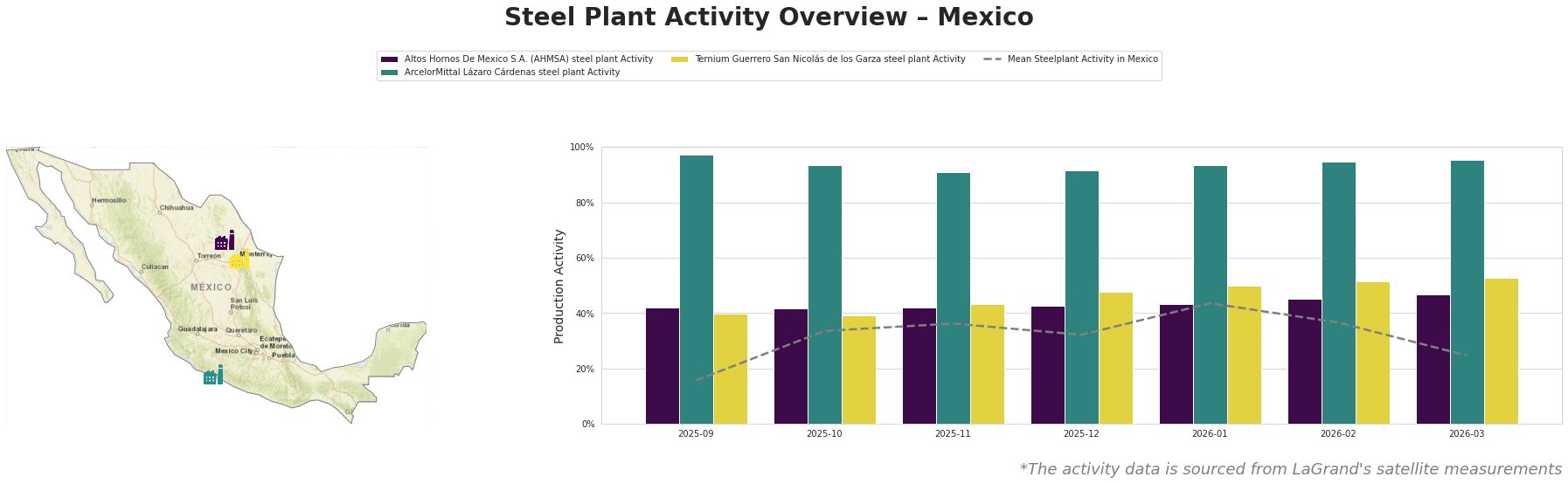
The overall mean activity of steel plants saw a stark decline to 25% in March 2026 from 44% in January, indicating a significant downturn. AHMSA observed a rise to 47% in March from 43% in January, whereas ArcelorMittal Lázaro Cárdenas and Ternium Guerrero showed stability at 95%. However, the mean activity remains markedly low, and particularly concerning is the persistent 23-month contraction in the manufacturing sector as cited in “Mexico factory contraction extends into Feb”.
At AHMSA, located in Coahuila, the recent activity level of 47% marks an improvement, but the plant still operates below expected benchmarks, amid economic uncertainties highlighted in both the “Mexico trade balance swings to deficit in Jan” and “Production cuts in Mexico will last until February.” Although AHMSA’s main processes involve integrated steelmaking, it may need to prepare for reduced demand as the overall economy grapples with a downturn.
ArcelorMittal Lázaro Cárdenas maintains its activity at 95%, largely insulated from broader sector downturns due to its diversified product range including slabs and billets, critical for automotive and construction sectors. However, the overall decline in manufacturing as noted may lead to potential supply disruptions in the near term, and careful monitoring of customer demand is advisable.
Ternium Guerrero, operational at 53%, remains reliant on the construction and tools sectors. Its recent stable activity levels suggest some resilience, but caution remains warranted due to broader economic indicators, particularly as manufacturing faces prolonged contraction.
Given the negative sentiment, steel buyers should consider these actionable steps:
- Supply Chain Adjustments: Monitor AHMSA closely for any further signs of production disruptions stemming from economic downturns highlighted in trade balance articles.
- Procurement Timing: Assess the stability in ArcelorMittal’s output to leverage purchasing before projected supply shortages might occur.
- Cost Management: With potential contract and tariff adjustments anticipated due to USMCA negotiations, it is prudent to negotiate terms that allow for flexibility in volume and pricing.
- Risk Mitigation Plans: Establish contingency plans for procurement strategies to adapt to possible steel shortages rooted in the ongoing manufacturing sector contraction.
In conclusion, while some fluctuations exist across the plants, the overarching sentiment is negative, indicating the potential for further challenges in the Mexican steel market.