


From the Field to the Dashboard – Built by Experts, for Experts.
Discover What's Really Happening in the Steel Industry
Use the AI-powered search engine to analyze production activity, market trends, and news faster than ever before.
Try the Free AI Search EngineDeclining Steel Activity in Asia Sparks Caution Among Buyers Amid Geopolitical Tensions
Recent developments in Asia’s steel market have been significantly affected by geopolitical factors and rising fuel prices highlighted in articles such as “Soaring Asia bunker prices spur Panama demand“ and “Freight issues disrupt Indonesian coal market.” These events are reflected in satellite observations indicating a notable decline in activity across various steel plants in the region, particularly in the backdrop of mounting logistical challenges.
The following table summarizes the recent activity levels of selected steel plants in Asia:
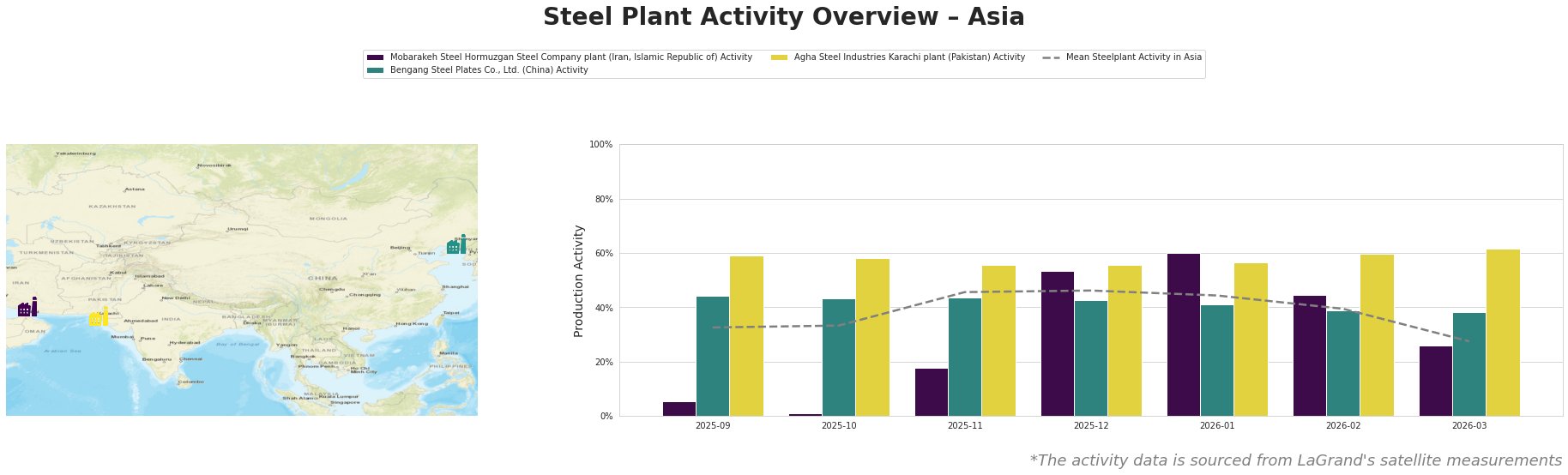
Mobarakeh Steel Hormuzgan witnessed a staggering drop from 60% to 26% activity between January and March 2026, with no clear connection to recent news articles. The Freight issues disrupt Indonesian coal market article suggests that broader disruptions due to rising bunker prices might indirectly affect operations, but no specific causation can be definitively drawn.
In contrast, Bengang Steel Plates Co., Ltd. remained relatively steady, but still saw a decrease in activity from 41% in January to 38% in March. The link to “Soaring Asia bunker prices spur Panama demand” may highlight the impact of increasing shipping costs indirectly affecting raw materials acquisition.
Agha Steel Industries Karachi demonstrated resilience with activity levels fluctuating between 56% and 62% across the monitored period. This stability may provide some optimism, yet shifts in steel demand due to global market pressures prompted by geopolitical tensions could impact future operational capacity.
The overarching market sentiment is negative, attributed to heightened geopolitical tensions impacting logistical elements including shipping and operational costs. High bunker prices—as reported in “Soaring Asia bunker prices spur Panama demand”—have led many shipowners to reallocate vessels away from Asia, creating supply uncertainties that steel buyers should consider.
In light of these developments, steel buyers and market analysts are advised to:
- Monitor supplier stability closely, especially for those linked to Mobarakeh and Bengang, as operational challenges could lead to supply shortages.
- Consider flexible procurement strategies, given escalating logistics costs might affect delivery timelines and pricing.
- Engage alternative suppliers to mitigate risks associated with heavy reliance on specific plants or regions potentially impacted by geopolitical tensions.
These steps are not just prudent but necessary in navigating a volatile market landscape characterized by significant fluctuations in activity levels and contentious international relations.