


From the Field to the Dashboard – Built by Experts, for Experts.
Discover What's Really Happening in the Steel Industry
Use the AI-powered search engine to analyze production activity, market trends, and news faster than ever before.
Try the Free AI Search EngineBoost in European Steel Activity Amid UK Tariff Changes Signals Opportunity for Buyers
Europe’s steel market shows robust growth driven by strategic shifts in tariff policies. The upcoming announcement titled The UK plans to double tariffs on steel imports – Politico suggests that the UK aims to protect its steel industry by raising tariffs to 50% on imports exceeding specific quotas. Satellite data reveal a corresponding increase in plant activity across key European steel plants following strategic adjustments, particularly Tata Steel UK, aligning with initiatives to bolster local production against cheaper foreign imports.
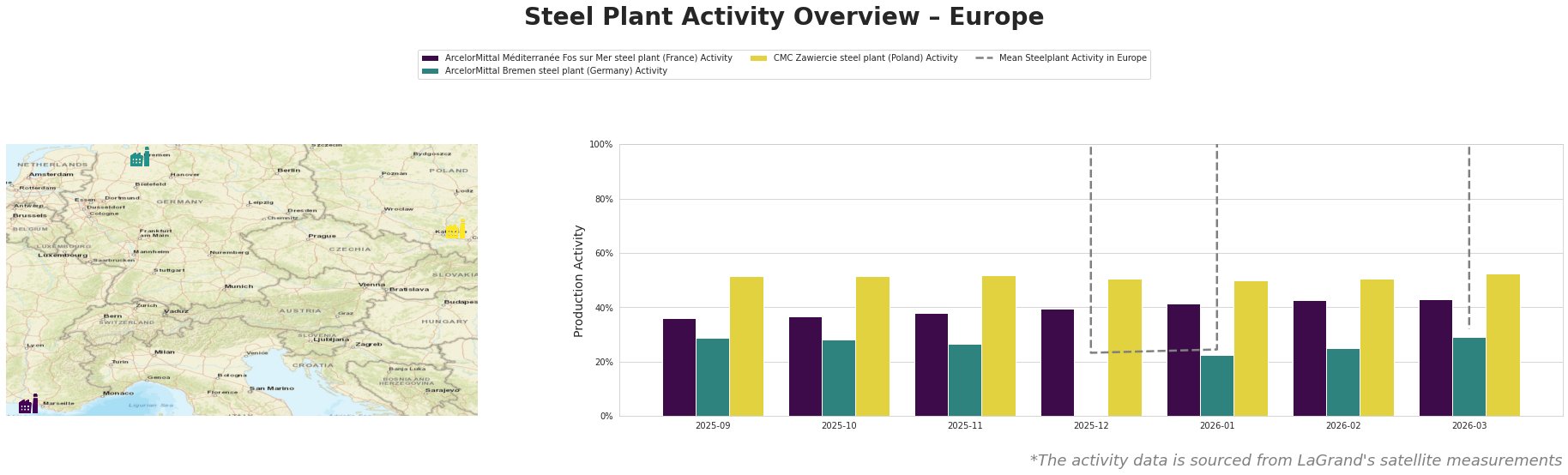
The activity levels of European steel plants indicate a marked recovery. Notably, the ArcelorMittal Bremen plant has shown lower levels of activity at just 25% in February but rebounded to 29% by the end of March, likely in response to heightened pricing power indicated in the article UK steel decoilers bracing for 50pc quota cut. Meanwhile, CMC Zawiercie remained relatively stable, with a notable peak activity at 53%, possibly capitalizing on the increased demand from local markets spurred by UK tariff changes.
At the ArcelorMittal Méditerranée Fos sur Mer, activity rose slightly from 36% to 43% over the months, suggesting a positive impact indirectly linked to the broader shifts in market dynamics initiated by the UK’s protecionist measures. However, it’s important to note that the connection between these activity increases and the discussed tariff adjustments remains somewhat tenuous, as no explicit linkage has been declared by the facilities.
To navigate the current market, steel buyers should prepare for potential supply constraints, specifically focusing on products impacted by UK tariff changes—especially hot-rolled coils, which are likely to see increased local demand, as referenced in UK is preparing to raise tariffs to 50% in the steel sector. It’s advisable for procurement teams to secure contracts with local suppliers to mitigate risks associated with fluctuating availability and pricing. Additionally, the anticipated price increases following Tata Steel’s recent rises indicate potential upward pressure on pricing through mid-2026, thus early procurement could yield cost advantages.
Given the observed activity levels and supportive market sentiment, this period presents a proactive opportunity for buyers to strengthen their supply chains in alignment with localized production increases and international tariff landscapes.