


From the Field to the Dashboard – Built by Experts, for Experts.
Discover What's Really Happening in the Steel Industry
Use the AI-powered search engine to analyze production activity, market trends, and news faster than ever before.
Try the Free AI Search EngineAsia Steel Market Insights: Neutral Sentiment as Activity Trends Reflect Regulatory Uncertainties
In the Asian steel market, recent activity at key plants shows mixed signals amid external pressures related to European steel trade dynamics. Recent articles, namely “EU downstream steel sector faces weak demand amid regulatory uncertainty,” and “Europe faces industrial hollowing without steel trade reform,” reflect concerns that could resonate beyond Europe, influencing Asian market sentiment as well. Notably, while the mean activity across Asian steel plants remains varied, shifts observed align intermittently with these external influences.
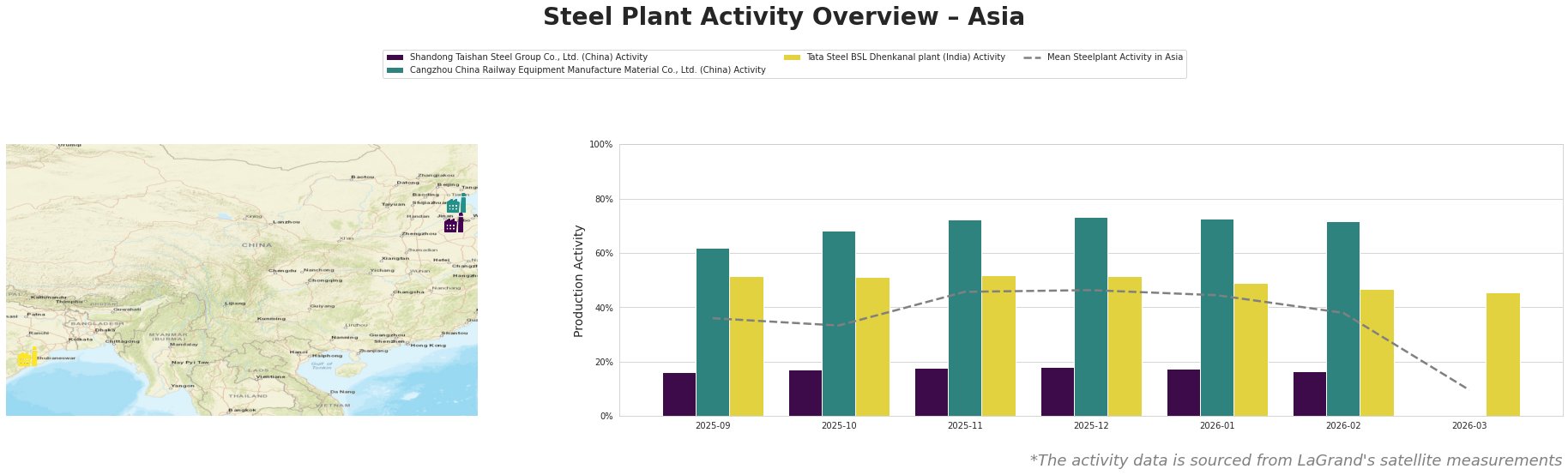
Shandong Taishan Steel Group has seen a notable decline, dropping from 18.0% in December to 16.0% in February, aligning with the sentiment of “weak demand” in Europe, hinting that similar trends could affect Asian supply. Noteworthy is the stable activity from Cangzhou China Railway, which peaked at 73.0% in December before holding steady, suggesting resilience in a competitive sector. This plant’s stability may indicate a strong demand from domestic infrastructure projects, contrasting with the broader European concerns of supply chain inefficiencies.
On the other hand, Tata Steel BSL Dhenkanal exhibited a reduction from 52.0% in December to 47.0% in February. This decline may not have a direct connection with the previously cited news but could highlight domestic market conditions; however, potential regional factors based on European pressures warrant close observation.
Given the current neutral sentiment and potential supply disruptions observed among Shandong Taishan and Tata Steel BSL, steel buyers are urged to review procurement strategies cautiously. Prioritizing orders for periods of stable demand in high-performance product segments, particularly from Cangzhou, may mitigate risks associated with unstable supply bases. Meanwhile, stakeholders should remain vigilant to EU regulatory developments that could compel shifts in production strategies across Asia. The aforementioned articles serve as critical indicators of impending market realignment, necessitating proactive engagement with suppliers for ensuring continuity and optimization in procurement processes.