


From the Field to the Dashboard – Built by Experts, for Experts.
Discover What's Really Happening in the Steel Industry
Use the AI-powered search engine to analyze production activity, market trends, and news faster than ever before.
Try the Free AI Search EngineAdverse Trends in Asia’s Steel Market: Activity Plummets Amid Energy Crisis
The steel market sentiment across Asia has turned very negative, driven by escalating energy costs stemming from geopolitical tensions. Recent articles such as “Iran-Krieg: Angst vor neuer Energiekrise“ and “Gabriel Felbermayr: Irankrieg für China schmerzhafter als für die USA“ highlight concerns over soaring gas and oil prices, with analysts warning about possible economic impacts that may stifle manufacturing sectors, including steel. This is reflected in satellite data showing a notable decline in activity levels at key steel plants.
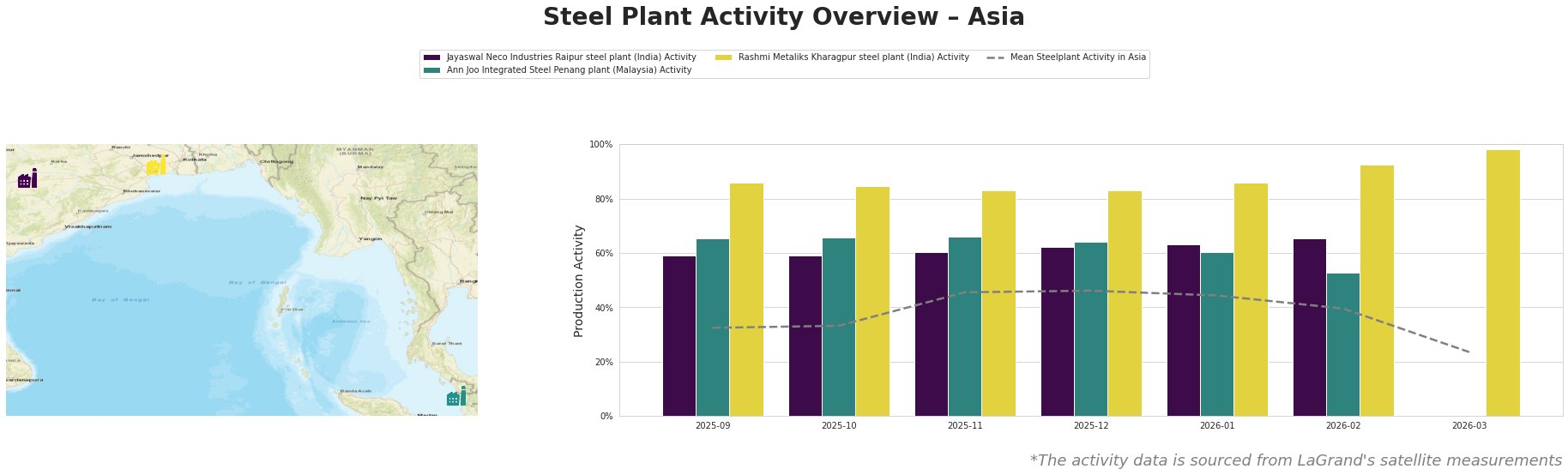
Activity at the Jayaswal Neco Industries Raipur steel plant showed resilience until February 2026, when it peaked at 65%. However, it is no longer observable due to data loss in March while mean activity in Asia plummeted to 24%, indicating severe market strain likely tied to the geopolitical tensions mentioned in the article “Iran-Krieg: Angst vor neuer Energiekrise”.
Meanwhile, Ann Joo Integrated Steel Penang plant remained stable at 66% through March but also lacks further activity data. The Rashmi Metaliks Kharagpur steel plant has displayed a recent surge, reaching 98% in March 2026, creating pressure as the plant capitalizes on shifting market dynamics amidst regional uncertainties.
The activity shifts starkly contrast the broader trend in Asia, where the combined plant activity fell drastically. Although Rashmi appears well-positioned currently, the implications of rising energy prices laid out by Gabriel Felbermayr suggest that the overall economic environment could significantly impact future operational capabilities across the region.
As such, supply disruptions, particularly from the mean activities of all observed plants trending downwards, pose substantial procurement challenges. Steel buyers should focus on Rashmi Metaliks Kharagpur, which may continue to operate at higher capacity, while considering potential energy constraints affecting other plants. Consultation regarding energy sourcing options will be essential for planning.
To manage procurement effectively, buyers are advised to:
– Prioritize sourcing from Rashmi Metaliks due to its robust activity levels.
– Monitor energy cost trends as per insights from the articles to anticipate potential price fluctuations.
– Engage in strategic stockpiling to hedge against supply interruptions that could arise from the geopolitical situation and declining activities among competitors.
With the uncertainty dominating the landscape, these actions are crucial for maintaining competitiveness in the steel market.