


From the Field to the Dashboard – Built by Experts, for Experts.
Discover What's Really Happening in the Steel Industry
Use the AI-powered search engine to analyze production activity, market trends, and news faster than ever before.
Try the Free AI Search EngineUkraine Steel Market Report: Positive Activity Trends Amid New EU Import Quotas
Ukraine’s steel industry is experiencing a significant uptick in activity levels in 2026, despite challenges posed by new EU regulations. The EU unveils tighter steel import quotas, new allocation structure and Belmetal highlights impact of new EU steel import quota system have directly influenced market dynamics, particularly in how tariffs and trade agreements are structured.
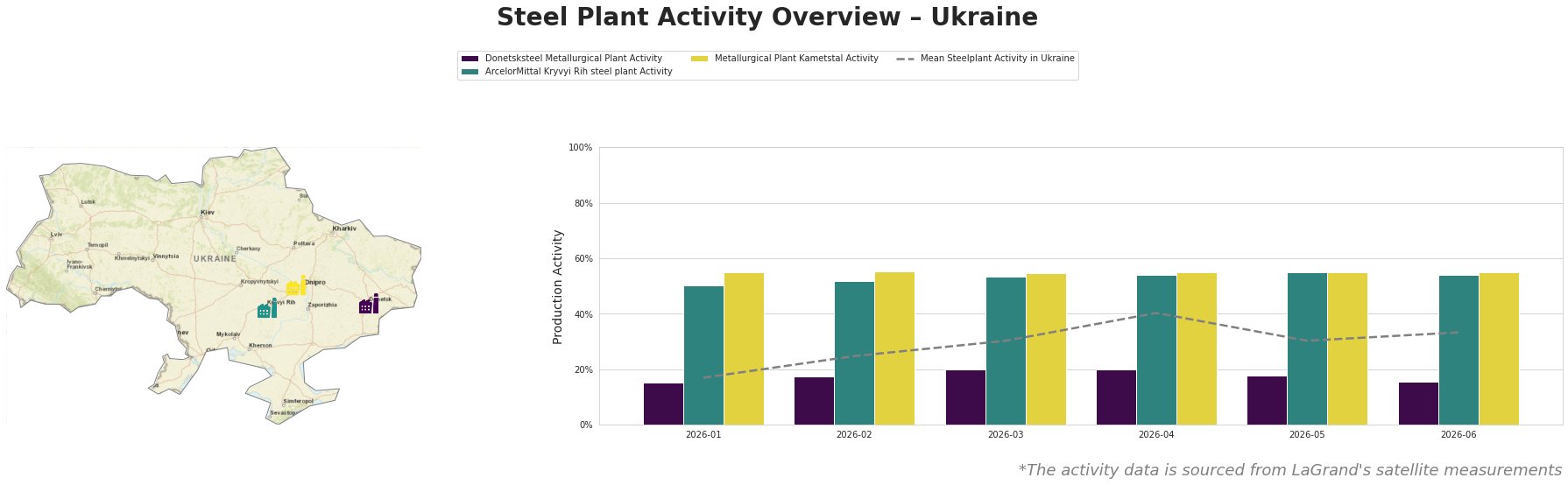
Recent satellite data reveals that the mean activity across Ukrainian steel plants has shown resilience with a 33% activity level in June, contrasting with the observed decrease in Donetsksteel Metallurgical Plant, which fell to 16% from 20% in April. In comparison, ArcelorMittal Kryvyi Rih maintained a robust activity level at 54%, demonstrating stability despite the regulatory landscape. Notably, the Metallurgical Plant Kametstal sustained a consistent 55% activity, hinting at potential market adaptability.
Recent Activity Trends
Individual Plant Insights
Donetsksteel Metallurgical Plant is encountering operational challenges with a current activity level of just 16%. This 4 percentage point drop correlates with the recent EU import quotas that likely affect sourcing materials, as highlighted in the EU introduces stricter steel import quotas and new distribution structure article. The plant primarily produces pig iron, and its mothballed EAF technology may further hamper adaptability to changes in the market.
ArcelorMittal Kryvyi Rih, with a stable activity level at 54%, benefits from its integrated BF infrastructure and diversified product offerings, including semi-finished and finished products. This resilience suggests a strong position to navigate the new regulatory framework while continuing to meet domestic and export demands.
Metallurgical Plant Kametstal has maintained consistent activity at 55%, indicative of its effective operational strategies and product variety in energy and transport sectors. Like ArcelorMittal, it appears to be less affected by the changes brought about by the new EU policies, demonstrating a potential model for overcoming import constraints.
Market Implications
The tightening of steel import quotas poses potential supply disruptions, particularly for non-FTA participants like Donetsksteel. This plant’s declining activity signals possible procurement challenges.
Steel buyers should consider prioritizing sourcing from ArcelorMittal Kryvyi Rih and Metallurgical Plant Kametstal, given their high activity levels and operational resilience. It is advisable to adjust procurement strategies by closely monitoring quota utilization and collaborating with suppliers for efficient material acquisition, particularly as flexibility in sourcing becomes increasingly critical amid evolving market conditions. The need for strategic planning is emphasized by the findings from Belmetal highlights impact of new EU steel import quota system, suggesting that meticulous quota management will be essential for securing material access.