


From the Field to the Dashboard – Built by Experts, for Experts.
Discover What's Really Happening in the Steel Industry
Use the AI-powered search engine to analyze production activity, market trends, and news faster than ever before.
Try the Free AI Search EngineAsia Steel Market Report: Mixed Signals as Production Trends Show Regional Variance
In Asia’s steel market, Japan’s crude steel output saw a year-on-year rise while China’s steel exports experienced a notable decline, as evidenced by the articles titled “Japan’s crude steel output rises in May 2026 year on year” and “China’s steel sheet/plate exports down 13.9 percent in January-May 2026.” This reflects underlying shifts in demand and production activity levels at regional plants, which are important for steel buyers and analysts to monitor.
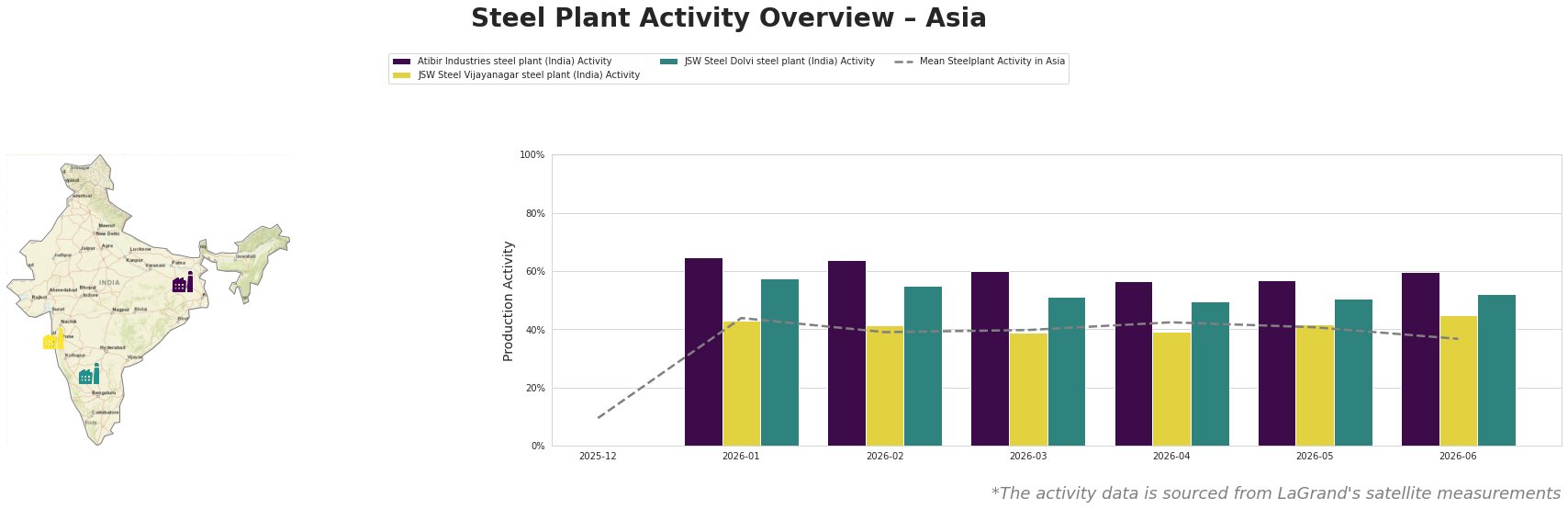
Atibir Industries reported stable activity levels, peaking at 65% in January before settling to 60% in June, linked to a stable production of pig iron and rolled products but with no explicit connection to news trends. Conversely, JSW Steel Vijayanagar saw activity levels fluctuate more, peaking in June at 45%, which may reflect the Japanese output increase and the need for specific semi-finished goods in line with “Japan’s crude steel output rises in May 2026 year on year.” Similarly, JSW Steel Dolvi maintained a steady production trajectory, likely driven by sustained demand in sectors like automotive and building, but also shows no explicit link to the current news trends.
Evaluated Market Implications
Current data suggest potential supply disruptions mainly from China’s declining export figures, as “China’s steel sheet/plate exports down 13.9 percent in January-May 2026” indicates reduced global presence. Steel buyers are encouraged to consider increasing procurement from Japanese sources, backed by the rising output in Japan as reported. Given that JSW Steel Vijayanagar’s production activities could facilitate supply in response to this demand, buyers should evaluate sourcing strategies closely tied with changes in Japanese production capacity.
In summary, while immediate disruptions might not be evident, the contrasting trends in production output across Asia highlight the need for strategic foresight in procurement decisions, particularly with an eye on Japanese steel production’s potential to offset declines from China.