


From the Field to the Dashboard – Built by Experts, for Experts.
Discover What's Really Happening in the Steel Industry
Use the AI-powered search engine to analyze production activity, market trends, and news faster than ever before.
Try the Free AI Search EngineUkraine Steel Market Report: Activity Declines Amid Trade Uncertainty
Recent shifts in Ukraine’s steel market reflect a negative sentiment, heavily influenced by impending changes in international trade agreements and tariffs. Notably, the article “British Chambers of Commerce warns UK steel quota changes to disrupt SME costs, logistics“ links worsening activity levels to expected disruptions from new UK steel import quotas, effective July 1, 2026. Concurrently, satellite data indicates drops in steel plant operations, showcasing a pronounced negative trend as procurement conditions become uncertain.
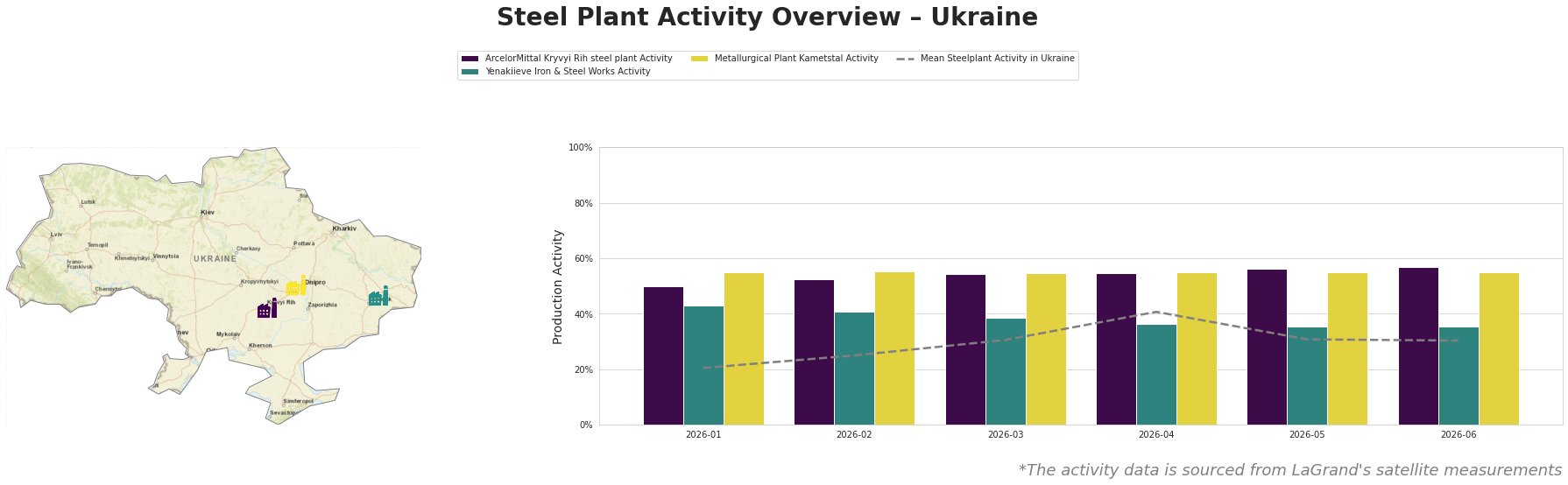
Measured Activity Overview
Activity data reveals that while ArcelorMittal Kryvyi Rih demonstrated slight activity increases with a peak of 57% in June 2026, its overall performance remains lower than ideal in an increasingly strained market. The Yenakiieve Iron & Steel Works showed a decline to 35% activity, directly correlating with concerns raised in “In Britain, warnings are being issued about the threat to business posed by new steel import quotas“, which predict reduced demand for Ukrainian steel due to UK import restrictions. Metallurgical Plant Kametstal maintained stable activity at 55%, but overall operating conditions highlight insufficient demand relative to production capabilities.
Plant-Specific Insights
ArcelorMittal Kryvyi Rih, situated in Dnipropetrovsk, operates primarily as an integrated steel producer. Recent satellite observations show its activity rising to 57% as of June 2026. However, this modest increase does not mitigate the broader context of adverse effects stemming from tightening steel import quotas in the UK, as discussed in “Tariff quota negotiations are politicizing European steel imports“.
Yenakiieve Iron & Steel Works, located in Donetsk, has experienced a fall to 35%, likely impacted by the market’s vulnerability due to the impending quota changes discussed in “ISTAT warns against transitional agreement fraud”. The plant’s operational efficacy is hindered, as tight quotas are anticipated to limit its export potential significantly.
Metallurgical Plant Kametstal, also based in Dnipropetrovsk, has shown resilience, maintaining consistent production levels. Their stability at 55% reflects potential flexibility amidst uncertainties voiced by the BCC concerning the looming supply chain disruptions expected post-implementation of the new tariffs and quotas.
Evaluated Market Implications
The anticipated adjustments to UK steel import quotas may lead to supply disruptions, particularly affecting the Yenakiieve Iron & Steel Works, which relies heavily on international markets. Steel buyers should prepare for the adverse effects these changes will impose, potentially destabilizing pricing and availability.
Actionable Recommendations:
1. Prioritize sourcing from ArcelorMittal Kryvyi Rih, leveraging its recent activity increase, as sustained capacity might provide necessary supply continuity.
2. Consider diversifying suppliers to mitigate risks associated with Yenakiieve’s declining performance in light of international trade uncertainty.
3. Stay informed of developments stemming from the news articles cited, especially as they pertain to adjustments in UK import regulations, signaling possible shifts in procurement strategies needed for effective supply chain management amid evolving market conditions.