


From the Field to the Dashboard – Built by Experts, for Experts.
Discover What's Really Happening in the Steel Industry
Use the AI-powered search engine to analyze production activity, market trends, and news faster than ever before.
Try the Free AI Search EngineAsia Steel Market Report: Growth Forecasts Bolstered by Strategic Investments and Increased Activity
Recent developments in the Asian steel market reflect a very positive sentiment, driven primarily by strategic plant upgrades and new investments. The articles titled U. S. Steel Board Approves Funding for US$350 Million Gary Works Project, Advances Other Projects and Mesabi Metallics Secures US$150 Million for American DR-Grade Iron Ore Mine and Pellet Plant highlight significant funding that is boosting production capabilities, correlating with observed increases in activity at key steel plants in the region, particularly in India.
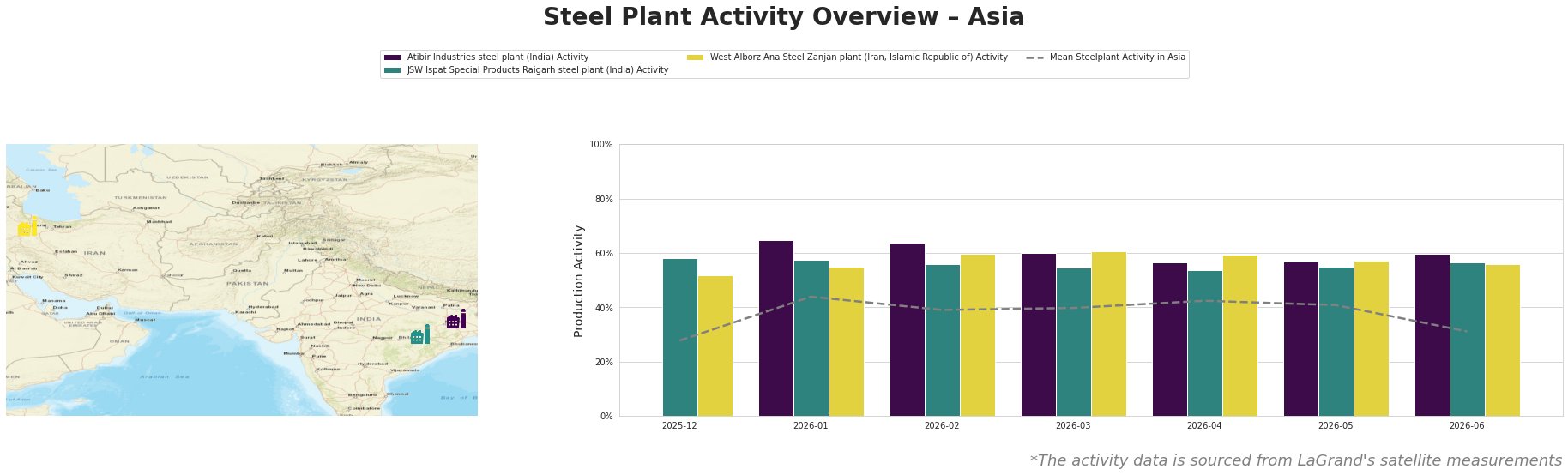
Atibir Industries’ activity peaked at 65% in January 2026, aligning with increased production demand driven by adjacent investments such as Mesabi Metallics’ $150 million project, which aims to enhance U.S. steel supply chains. However, by June 2026, activity slightly declined to 60%. JSW Ispat’s activity remained robust, with fluctuations around 55-58% from February through May 2026, reflecting stable production levels amidst market dynamics.
The West Alborz Ana Steel plant showed activity consistent with the mean, maintaining between 52% to 61% in recent months, indicative of stable operational capacity. However, no explicit connections to the recent news articles were established, suggesting its activity may be more influenced by local factors rather than the U.S. market developments.
Potential supply disruptions could arise if U.S. Steel delays the construction of its $1.9 billion direct reduced iron plant, which may suppress the availability of raw materials for plants like Atibir Industries that depend on imported iron ore. Steel buyers are recommended to actively engage with their supply chains, particularly those sourcing from Indian plants, as both Atibir and JSW Ispat’s enhanced activity suggests opportunity for lock-in pricing ahead of potential volatility. Monitoring the progress of the U.S. investments is essential for anticipating changes in raw material availability and pricing.