


From the Field to the Dashboard – Built by Experts, for Experts.
Discover What's Really Happening in the Steel Industry
Use the AI-powered search engine to analyze production activity, market trends, and news faster than ever before.
Try the Free AI Search EngineEurope’s Steel Market Faces Severe Downturn as Demand Plummets
The European steel market is experiencing a significant downturn, characterized by weak demand and buyer reluctance. As noted in “Prices for European long products are stable against the background of weak demand and low appetite of buyers”, there are pronounced price resistances due to slow project development, exacerbated by adverse weather. Satellite data reveals a substantial drop in activity at key steel plants, reflecting these market sentiments with observable declines in production levels.
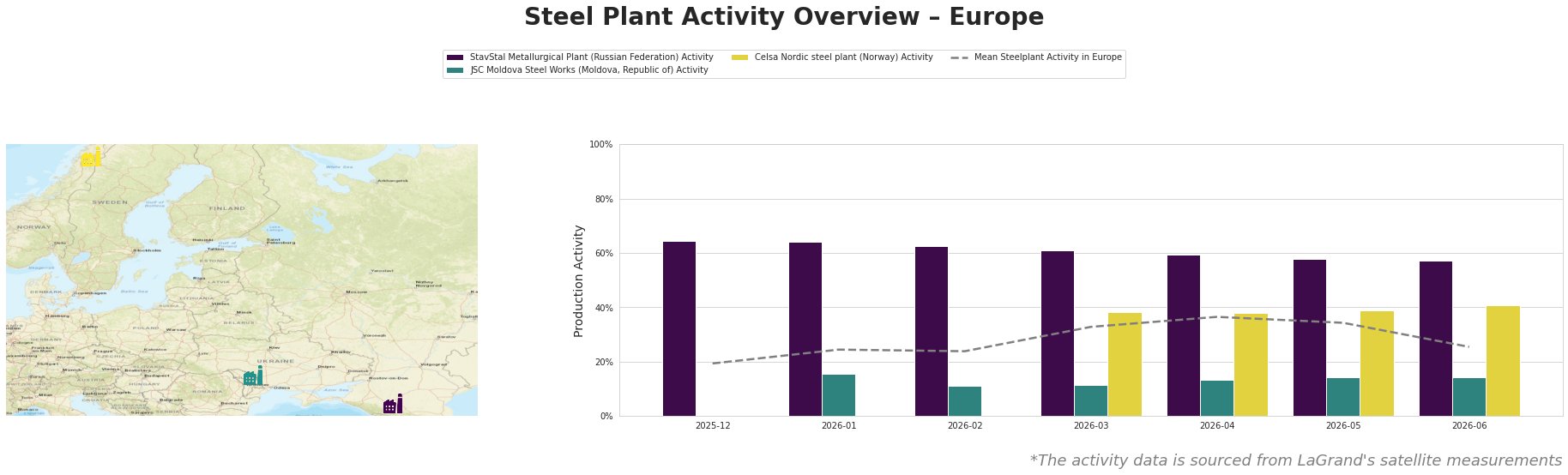
The StavStal Metallurgical Plant has remained relatively consistent but has shown a slight decline from 64.0% (Dec 2025) to 57.0% (Jun 2026), correlating with low buyer appetite as reported in “European long steel prices stable amid weak demand, low buyer appetite.” The operational stability suggests that while this plant has resisted significant cuts, it reflects general market pressures and the overall weak demand in the region.
Conversely, the JSC Moldova Steel Works has displayed a stark decrease, particularly from 16.0% to 14.0% activity in recent months, consistent with a broader trend of diminishing market interest as indicated by the same articles. This decline underlines the impact of environmental factors and buyer hesitation on production levels.
The Celsa Nordic steel plant reported slight fluctuations with a recent increase to 41.0%, which could be a strategic effort to capitalize on minimal demand amidst pricing resistance, further echoed in the reports of overall stable pricing from Italian mills.
Given the prevailing market conditions, potential supply disruptions are likely, particularly affecting buyers reliant on Eastern European suppliers where activity is waning. Steel procurement professionals should explore diversified sourcing strategies, considering the cautious stance of suppliers in “Bulgarian longs prices weighed down by low demand, suppliers show greater flexibility”, as Bulgarian actors are under pressure to secure orders amidst decreasing trading activity.
In summary, steel buyers should prepare for continued pricing resistance and potential delays in order fulfillment from Eastern European mills, necessitating a flexible procurement approach to mitigate risks in a declining market environment.