


From the Field to the Dashboard – Built by Experts, for Experts.
Discover What's Really Happening in the Steel Industry
Use the AI-powered search engine to analyze production activity, market trends, and news faster than ever before.
Try the Free AI Search EngineNegative Steel Market Outlook in Asia: Supply Chain Concerns Heightened
Recent data reveals a significant downturn in steel production activity across Asia, as indicated by news of growing import demand in the EU. The articles titled “EU quota usage exceeds 85% in multiple steel categories“ highlight that Vietnam, Turkey, South Korea, India, Taiwan, and China have faced substantial depletion of steel quotas, indicating rising import pressures amid decreasing domestic activity in Asia’s major plants.
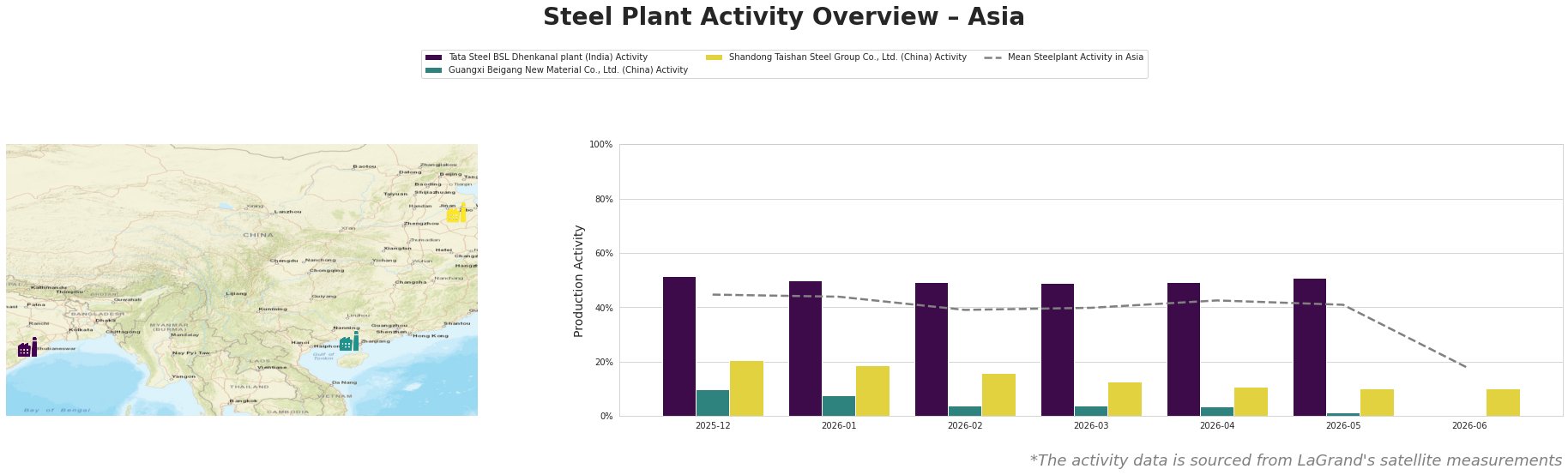
Activity data shows a pronounced decline in mean steel plant activity, sharply dropping to 17% by June 30, 2026. Notably, Guangxi Beigang New Material Co., Ltd. recorded an activity reduction to 0%, marking a critical production halt, possibly linked to rising operational challenges or decreased demand as reflected in the EU’s robust quota utilization patterns. Conversely, Tata Steel BSL Dhenkanal plant maintained activity at 51% despite a broader downturn.
The Tata Steel BSL Dhenkanal plant, located in Odisha, with a crude steel capacity of 5,600 mt, has displayed resilience with activity levels remaining above average (mean activity 17%). However, the plant has seen a decrement in activity (52% to 51%) from May to June 2026, amidst fluctuating market dynamics and a potential shift towards increased imports as implicated by the EU quota usage news.
In contrast, Guangxi Beigang New Material Co., Ltd. grappled with dwindling activity levels, culminating in a complete halt, reflecting critical oversupply or contraction in local demand which correlates with the trending reduction of imports in Asia. The plant’s operational ability must now be reassessed in light of these developments.
Finally, Shandong Taishan Steel Group Co., Ltd. operates at a very low level of 10% activity in June 2026, indicating a concerning state against the backdrop of overwhelming demand in the EU. This situation may lead to procurement disruptions given the plant’s capacity and existing operational engagements.
Given the current market trends and observed activity measures, steel buyers should adopt a cautious approach:
– Prioritize sourcing from Tata Steel BSL Dhenkanal with more stable activity levels.
– Prepare for potential supply interruptions from Guangxi and Shandong due to their drastically decreased operational capacities.
– Consider diversifying into alternative suppliers to mitigate the impact of domestic activity drops on procurement timelines.
These trends highlight the urgent necessity for buyers to actively monitor and recalibrate sourcing strategies in anticipation of future supply chain disruptions.