


From the Field to the Dashboard – Built by Experts, for Experts.
Discover What's Really Happening in the Steel Industry
Use the AI-powered search engine to analyze production activity, market trends, and news faster than ever before.
Try the Free AI Search EngineEurope Steel Market Report: Negative Sentiment Amid Evolving Tariff Quotas
The steel market in Europe is currently facing significant challenges, influenced by the ongoing discussions surrounding new UK steel tariff measures. As outlined in The UK may consider easing new protective measures on steel – media reports, impending changes are set to reduce steel import quotas by 60%, resulting in increased prices and potential supply shortages. This sentiment aligns with notable activity declines observed through satellite data, particularly at UK-dependent plants.
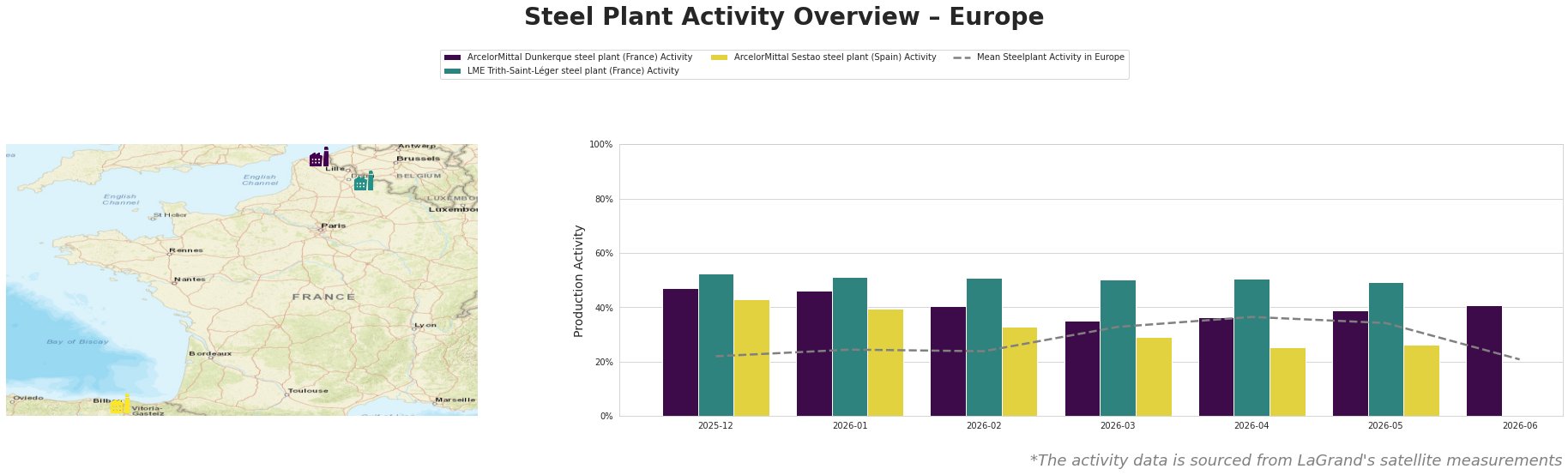
The ArcelorMittal Dunkerque steel plant in France has seen a decline from a high of 47.0% in late December 2025 to 41.0% in June 2026, reflecting domestic market challenges. The ongoing backlash against new quotas, as highlighted in UK steel safeguard plans face industry backlash as July looms, suggests a potential risk for further declines in production efficiency, leading to supply disruptions for downstream sectors such as automotive and construction.
LME Trith-Saint-Léger has maintained relatively stable activity around 51% until May 2026 but could potentially be impacted by changing market conditions with quotas dropping, as noted in multiple articles regarding industry reactions such as Changes to quota system for UK steel imports expected amid industry backlash.
The ArcelorMittal Sestao plant has experienced a sharper pot from 43.0% in December to 26.0% by May, a reflection of heightened uncertainty and pricing pressures linked to upcoming tariffs. The implication of these quota-based restrictions could severely limit access to specific steel grades needed in the automotive and building sectors.
Given the downturn in activity levels across these plants and the uncertainty surrounding domestic tariffs, steel buyers should proactively consider stockpiling supplies before the quota implementation date of July 1, 2026, as panic buying is expected. Immediate procurement strategies might focus on specialized grades that are likely to experience the most significant supply challenges due to both quota reductions and production shortfalls.
In summary, the evolving landscape of the European steel market, compounded by protective measures and industry backlash, suggests a cautious approach for procurement professionals to mitigate risks associated with availability and pricing.