


From the Field to the Dashboard – Built by Experts, for Experts.
Discover What's Really Happening in the Steel Industry
Use the AI-powered search engine to analyze production activity, market trends, and news faster than ever before.
Try the Free AI Search EngineDeclining Steel Activity in Viet Nam Amid Exhaustion of EU Quotas Signals Challenges for Buyers
Viet Nam’s steel market faces a negative outlook as highlighted by the article “EU quota usage exceeds 85% in multiple steel categories“ which reflects a significant strain on plant activities. Further exacerbating concerns, recent satellite observations indicate dramatic declines in the operational levels of major steel plants in Viet Nam.
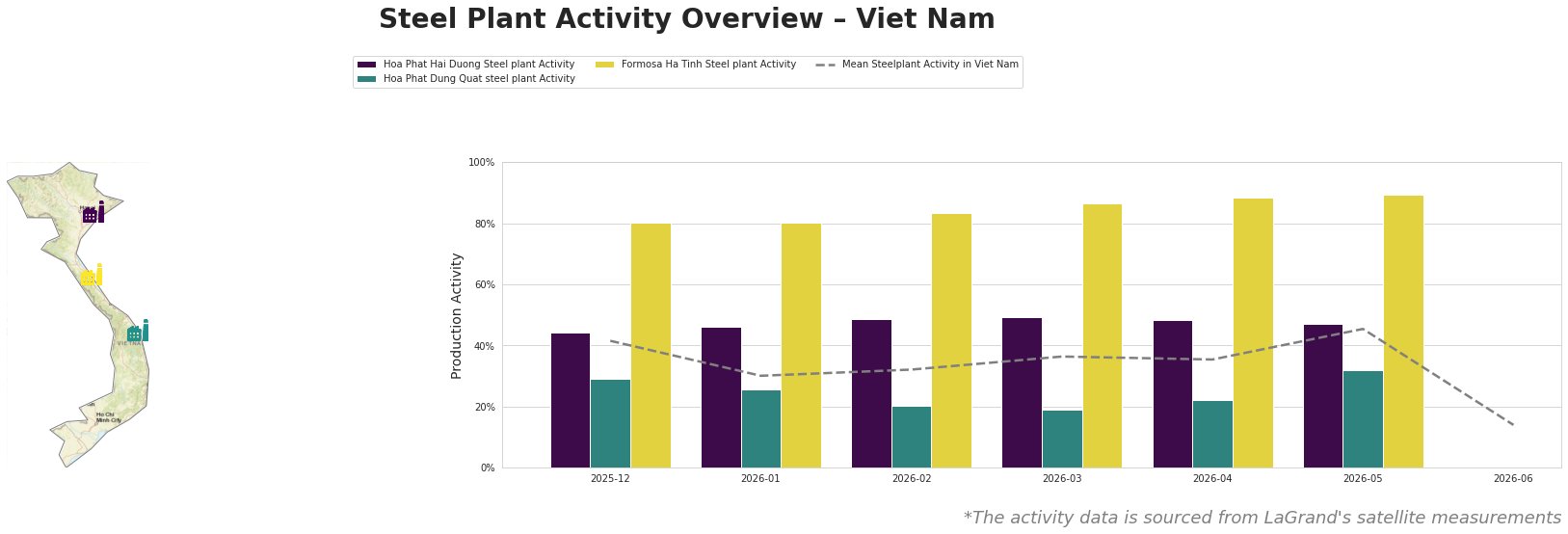
Activity levels in Viet Nam saw a drastic decrease in June 2026, with the mean activity plummeting to 14%, a substantial drop from 45% in May. Both Hoa Phat Dung Quat and Hoa Phat Hai Duong steel plants experienced declines, with the latter showing a drop from 47% to non-measured levels. This correlates with the EU quota article, indicating a saturation point in export capabilities that coincides with reduced operational levels.
The Hoa Phat Hai Duong Steel plant, crucial to the construction steel segment, showcased relative stability until a decline to non-operational status in June. This plant, which mainly operates on a Basic Oxygen Furnace (BOF) system, had previously recorded operational peaks in earlier months. The ongoing strong demand for HRC in the EU, as shown in quota exhaustion, doesn’t translate into performance improvements for this facility.
The Hoa Phat Dung Quat steel plant, with a capacity of 5,600 mt, endured a downward trend, dropping from a 32% operational level in May to inactivity. The plant, which also utilizes BOF technology for producing rolled products, reflects the challenges in aligning production with the industry’s declining trend as recorded in “EU quota usage exceeds 85% for several steel categories.”
Formosa Ha Tinh Steel plant, the highest-capacity facility at 7,500 mt, also saw a significant drop in activity, yet remains partially operational as of late May. No clear connections were established between its operational activity and the news developments at this time.
This current scenario indicates potential supply disruptions, particularly for HRC and other rolled steel products. Given a full quota utilization in the EU, importers should anticipate potential shortages and price surges due to declining capacities in Viet Nam, particularly from major players.
For steel buyers and market analysts, it is recommended to:
1. Secure contracts for HRC and other finished rolled products early to mitigate the risks of future price increases and supply shortages, noting the complete depletion of the EU import quota.
2. Monitor the operational status of major plants closely, anticipating that ongoing inactivity could further limit available supply in the coming months. Addressing immediate procurement needs could help alleviate potential shortages stemming from the current negative market sentiment.