


From the Field to the Dashboard – Built by Experts, for Experts.
Discover What's Really Happening in the Steel Industry
Use the AI-powered search engine to analyze production activity, market trends, and news faster than ever before.
Try the Free AI Search EngineSevere Decline in Asian Steel Activity Amid Intensified Regional Conflicts
Steel market activity across Asia has plunged drastically due to a backdrop of geopolitical tensions, as reported in several key articles. The situation has been highlighted by the Iran launches missiles at Israel and subsequent developments, which have resulted in significant disruptions and heightened volatility in steel production activity across the region.
Recent satellite data indicates a dramatic downturn in plant operations, particularly affecting Asian steel producers. Activity levels at the Jayaswal Neco Industries Raipur steel plant and Ann Joo Integrated Steel Penang plant fell considerably, aligning with the escalation of tensions. Specifically, the mean steel plant activity dropped to 27% in June 2026, indicating a severe downturn from prior months where activity was consistently above 39%.
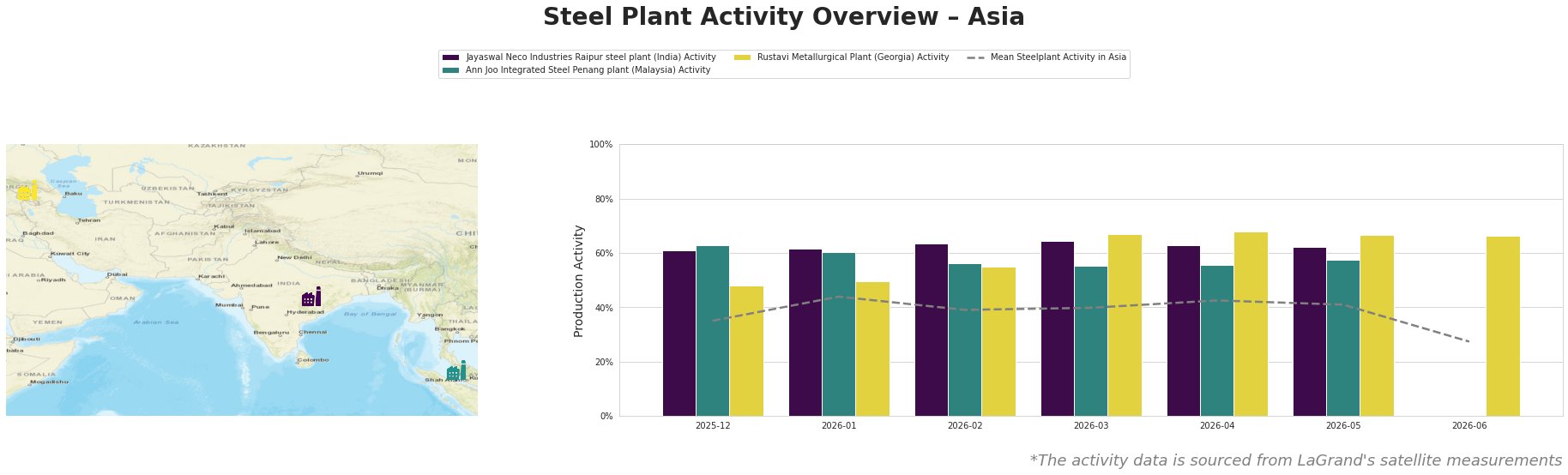
The Jayaswal Neco Industries Raipur steel plant in India, with a capacity of 1,200,000 MT for crude steel and relying on integrated processes (BF and DRI), observed fluctuations but ultimately did not register activity in June, likely due to supply disruptions stemming from regional unrest following the Iran launches missiles at Israel incident.
Meanwhile, the Ann Joo Integrated Steel Penang plant reported a relatively consistent activity until June but provided no recent observations, raising concerns about operational stability and the potential for further declines amid geopolitical strains.
The Rustavi Metallurgical Plant maintained a level of 66% in activity during the assessed period, but the overall market sentiment remains very negative, given the broader context of instability and supply chain uncertainties.
Evaluated Market Implications
Given the aggressive geopolitical climate triggered by actions detailed in the Iran launches missiles at Israel and subsequent developments, steel buyers should prepare for potential supply disruptions, notably from the Jayaswal Neco and Ann Joo plants.
Recommendations for Steel Buyers:
– Shift Procurement Strategies: Secure contracts and materials ahead of time from unaffected or less impacted regions to mitigate risks associated with possible production halts, especially stemming from geopolitical tensions.
– Monitor Developments Closely: Establish a protocol for consistent monitoring of both regional developments and satellite data to adapt procurement decisions dynamically and mitigate the effects of fluctuating supply.
This necessitated awareness of procurement strategies paired with real-time market vigilance to navigate the complexities arising from the current volatile landscape effectively.