


From the Field to the Dashboard – Built by Experts, for Experts.
Discover What's Really Happening in the Steel Industry
Use the AI-powered search engine to analyze production activity, market trends, and news faster than ever before.
Try the Free AI Search EngineSouth America Steel Market Update: Brazil’s Exports Surge Amid Declining Imports and Mixed Plant Activity
Brazil’s steel sector exhibits contrasting trends as hot dipped galvanized (HDG) exports soared by 330 percent in April, while imports plunged 71 percent due to anti-dumping duties on Chinese HDG supplies (source: Brazilian HDG exports surge 330 percent in April as imports fall 71 percent). Additionally, rebar exports increased nearly 12 percent driven by regional demand, but hot-rolled coil (HRC) exports fell by 16 percent, particularly impacting shipments to South America (source: In April Brazil rebar exports rise on stronger shipments to South America, while imports fell on no Egyptian supply; Brazilian HRC exports and imports fell in April amid drop in S. American shipments, S. Korean imports). These dynamics reflect a mixed sentiment in the South American market.
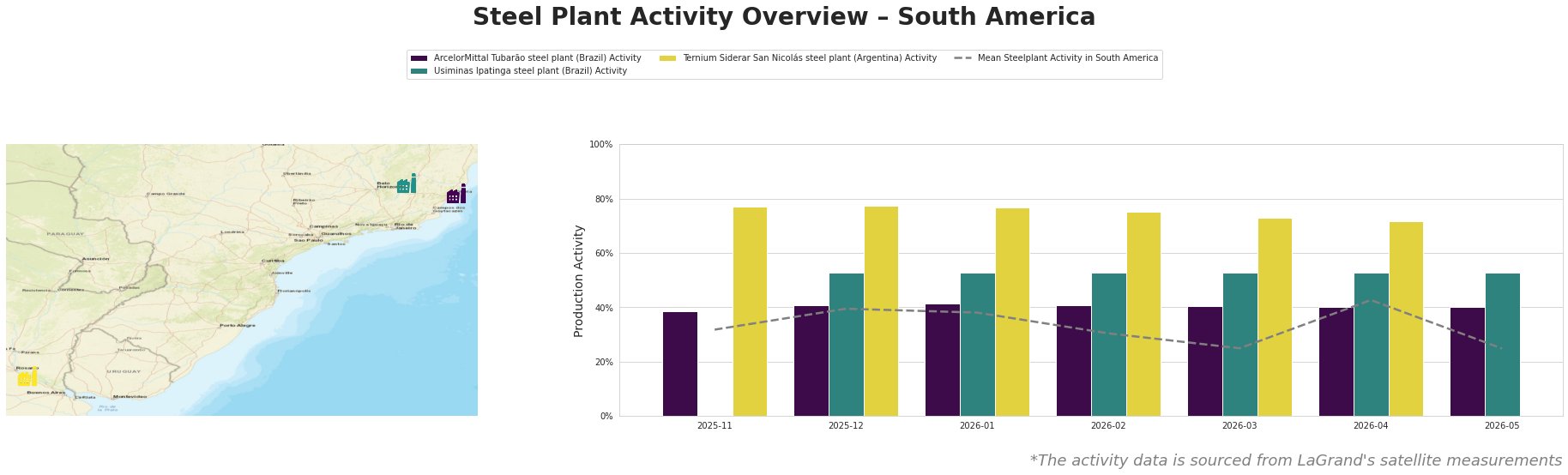
The ArcelorMittal Tubarão plant in Espìrito Santo maintains stable activity at 40% through April, correlating with increased demand for exported products but no significant link to the HDG export surge. Conversely, the Usiminas Ipatinga plant activity held steady at 53%, aligning with Brazil’s overall export increase in steel products, including HDG. In contrast, Ternium Siderar San Nicolás showed a slight decrease to 72%, reflective of regional trends observed in April.
In terms of market implications, the sharp fall in imports indicates a narrowing supply channel potentially leading to supply disruptions for certain materials. Steel buyers should prioritize sourcing from Brazilian exports, particularly HDG and rebar, given the strong regional demand and reduced competition from imports.
Additionally, consider securing arrangements with local suppliers like Usiminas and ArcelorMittal that maintain relatively stable operations, ensuring a more reliable flow of materials despite fluctuating shipment dynamics throughout the region.