


From the Field to the Dashboard – Built by Experts, for Experts.
Discover What's Really Happening in the Steel Industry
Use the AI-powered search engine to analyze production activity, market trends, and news faster than ever before.
Try the Free AI Search EnginePositive Steel Market Outlook for Asia as Plant Activity Increases Amid Regulatory Changes
Recent activity levels in the Asian steel market signal a positive trend, as evidenced by the ongoing engagement with carbon pricing mechanisms. Notably, the Commission consults on CBAM discounts to account for purchase of carbon credits by non-EU industry highlights evolving regulatory landscapes impacting steel imports from Asia. This aligns with observed activity changes at key plants, indicating a response to market adaptations.
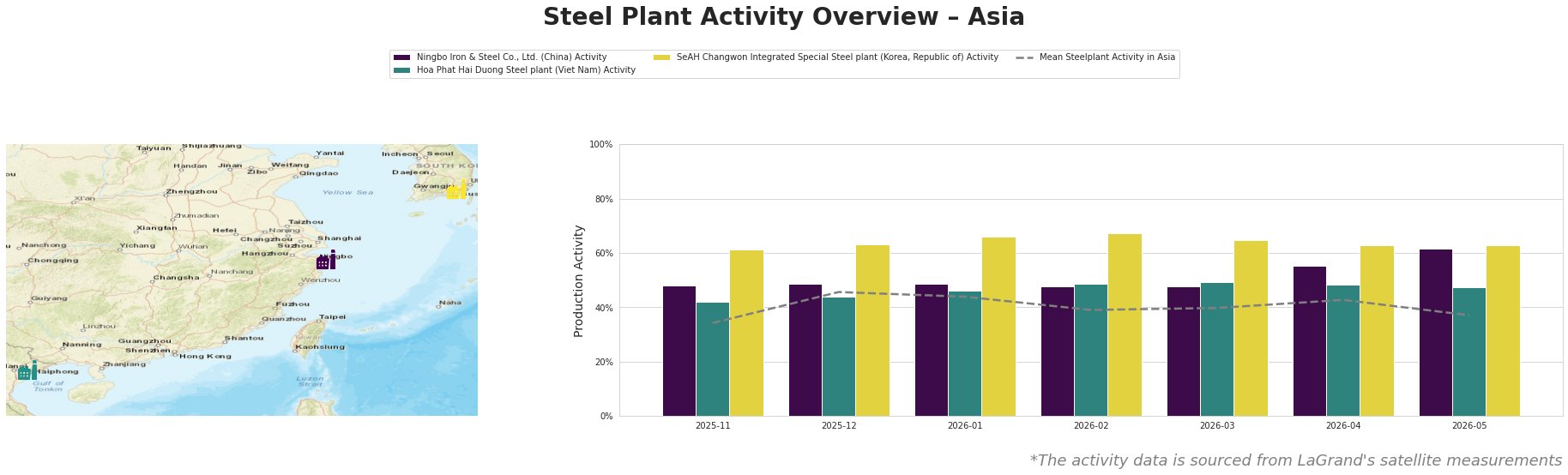
Ningbo Iron & Steel Co., Ltd., recorded an increase from 48% to 62% in activity by May 2026, which reflects strategic adjustments in response to carbon credit regulations and an inclination towards sustainability. While no explicit connections to the EUROMETAL warns at Steel Summit 2026: CBAM gaps threaten European manufacturing and 13 million jobs article were established for this plant, the rise indicates readiness to meet international trade compliance demands.
Hoa Phat Hai Duong Steel plant’s activity varied moderately from 42% to 47% across the reported period, standing at 44% by December 2025 before a dip in May 2026. The shift aligns with the regulatory scrutiny surrounding carbon credits but lacks a definite correlation to the articles provided.
Conversely, SeAH Changwon Integrated Special Steel plant has exhibited consistent growth, achieving an activity level of 66% in January 2026. This growth supports the likelihood that their product segments, such as stainless steel and wire rods, are steering the market positively in light of regulatory adaptations highlighted in the discussed articles.
Amid this evolving landscape, potential supply disruptions could be anticipated if compliance levels with regulations fluctuated among major players like those discussed. Steel procurement professionals should consider increasing orders with Ningbo and SeAH Changwon, leveraging their improving activity levels to secure competitive pricing. Engaging with suppliers ahead of expected regulatory impacts could mitigate potential cost increases driven by compliance adjustments within global steel markets.
Overall, the Asian steel market shows tangible signs of optimism as companies adapt strategically to evolving market dynamics and international regulatory frameworks.