


From the Field to the Dashboard – Built by Experts, for Experts.
Discover What's Really Happening in the Steel Industry
Use the AI-powered search engine to analyze production activity, market trends, and news faster than ever before.
Try the Free AI Search EngineChallenges Mount in European Steel Sector as SSAB Delays Fossil-Free Transition and Activity Levels Decline
In Europe, the steel industry faces negative sentiment fueled by recent developments. Specifically, SSAB delays Oxelösund EAF project due to permitting appeals highlights struggles with environmental regulations that affect the electricity grid essential for the company’s new electric arc furnace (EAF). Coupled with this, recent activity metrics indicate downturns across several plants, necessitating strategic procurement decisions.
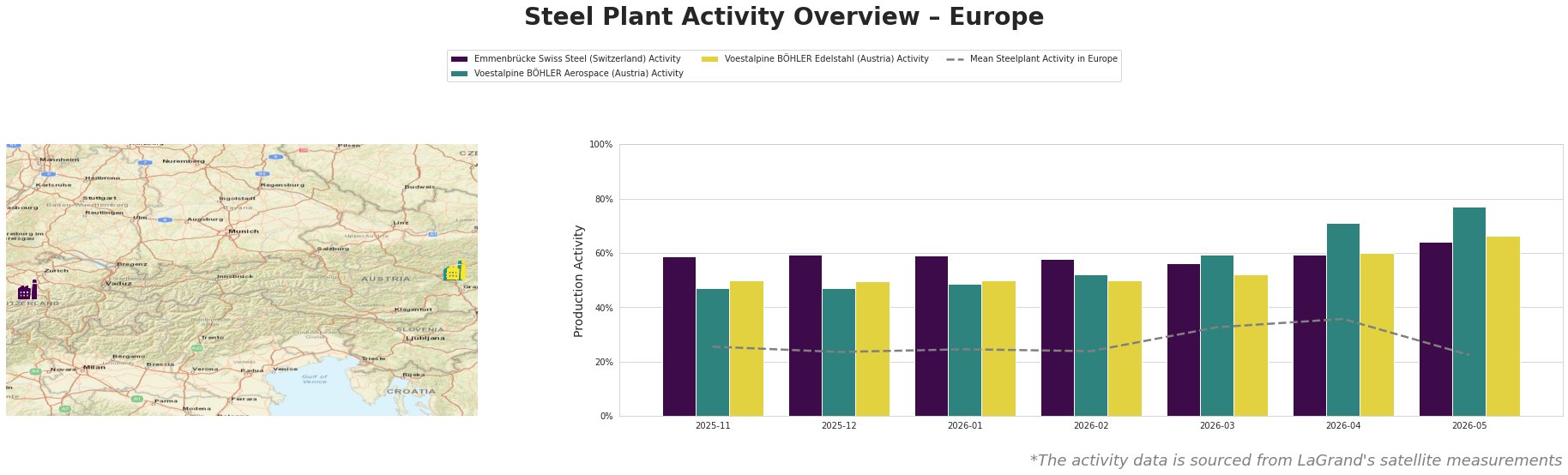
Activity levels have shown notable fluctuations, with mean activity across observed plants decreasing sharply to 22.0% in May 2026, down from a peak of 36.0% in April. The Emmenbrücke plant maintained steady activity around 60% until a minor fluctuation in May, while Voestalpine BÖHLER Aerospace experienced a significant rise to 77.0% but remains tethered below optimal performance metrics. SSAB’s permitting setbacks directly link to declining confidence and projected activity levels.
The SSAB postpones EAF project in Oxelesund due to permit appeals reinforces the challenges faced by major plants. The delay stems from a permitting stall for essential electric infrastructure, raising operational risks. While ongoing activities remain unaffected, this uncertainty may lead to cautious procurement behavior among buyers, impacting overall market dynamics.
Evaluated Market Implications
Current developments signal potential supply disruptions, particularly at SSAB facilities, which may struggle to modernize operations within projected timelines. Steel buyers should prioritize securing materials from Voestalpine BÖHLER Aerospace, which is currently engaging in higher output levels and could be better positioned to meet demand. Caution is advisable for procurement near weak-producing plants if conditions persist as projected in news cycles.