


From the Field to the Dashboard – Built by Experts, for Experts.
Discover What's Really Happening in the Steel Industry
Use the AI-powered search engine to analyze production activity, market trends, and news faster than ever before.
Try the Free AI Search EnginePositive Trends in Ukraine’s Steel Market Boost Buyer Confidence
As the Ukrainian steel industry shows signs of recovery, recent reports detail critical shifts in production and export dynamics. The article titled “Ukraine increased production of rolled steel by 39.5% m/m in March“ indicates a notable rebound in output, which coincides with satellite-monitored activity levels showing increased engagement across major steel plants. This positive momentum is underscored by emerging consumption patterns, as evidenced in the report “Consumption of steel products in Ukraine rose by 3.4% y/y in Q1,” reflecting renewed domestic demand.
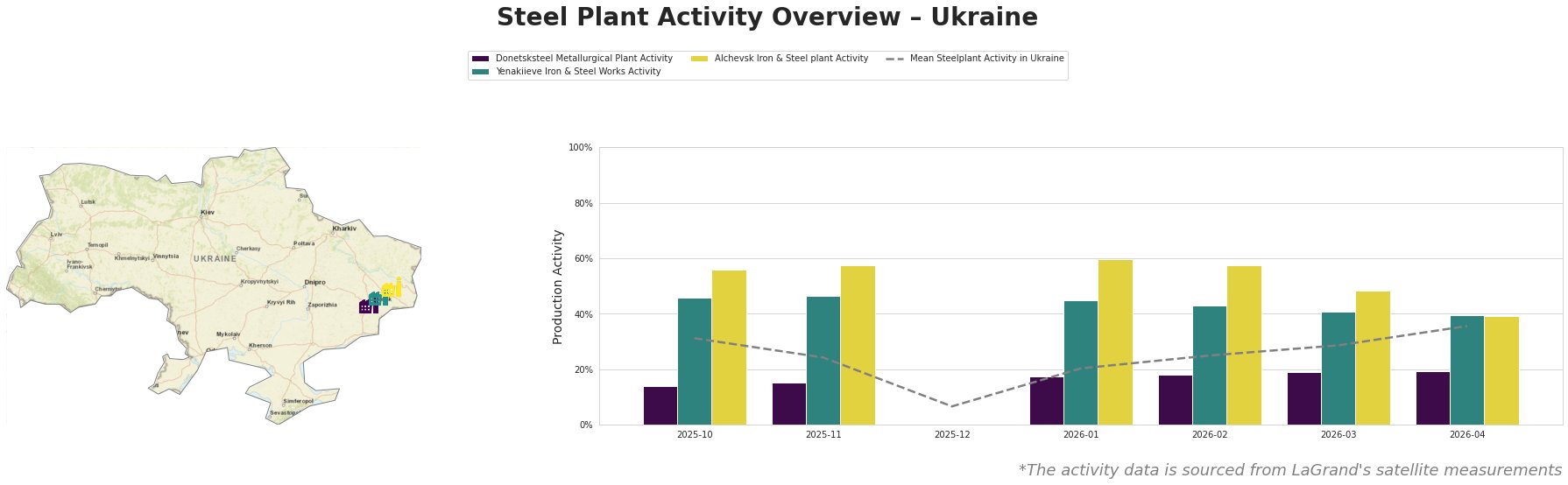
March 2026 saw a substantial jump in overall activity, rising to a mean of 36.0% across observed plants, with the Alchevsk Iron & Steel Plant maintaining a robust 48.0% activity level. Conversely, Donetsksteel’s activity remained low, reflecting its operational constraints as it stands at only 19.0%. These fluctuations correlate with the declaration in “Turkey imported 49,200 tons of raw materials from Ukraine in January-February,” despite an overall dip in imports from Ukraine, indicating potential supply chain disruptions that could be temporarily improvised amid ongoing instability.
The Yenakiieve Iron & Steel Works remains a critical player with an output decline between December 2025 and January 2026, from 46.0% to 45.0%, but it managed to stabilize production around 41.0% through March. This trend aligns with the recovering domestic consumption of steel as mentioned in “Consumption of steel products in Ukraine rose by 3.4% y/y in Q1,” indicating a responsive shift.
Potential supply disruptions could arise from Donetsksteel, experiencing an enduring low activity level, which may hinder steady procurement. Steel buyers should closely monitor developments at Yenakiieve and Alchevsk, given their increased outputs suggesting a stronger capacity for fulfilling market demands.
Procurement actions should emphasize sourcing from the Alchevsk Iron & Steel Plant and Yenakiieve Iron & Steel Works, harnessing their improved operational metrics while remaining cautious of fluctuations in Donetsksteel output, which could signal future shortages. Engaging with intermediaries familiar with these plants’ current capabilities could mitigate risks of supply interruptions as the market continues to stabilize.