


From the Field to the Dashboard – Built by Experts, for Experts.
Discover What's Really Happening in the Steel Industry
Use the AI-powered search engine to analyze production activity, market trends, and news faster than ever before.
Try the Free AI Search EngineAsia Steel Market Report: Neutral Sentiment Amidst Geopolitical Tensions and Plant Activity Declines
Tensions in the Strait of Hormuz have impacted the steel market in Asia, with key articles such as “Iran steel supply unlikely to benefit from ceasefire,” highlighting the cessation of major Iranian steel producers like Mobarakeh Steel and Khuzestan Steel. This situation has led to reduced activity at these plants, as evidenced by satellite data. Concurrently, the “US, Iran OK 2-week ceasefire, terms differ: Update“ underscores the standoff that continues to affect regional production capabilities without offering immediate relief.
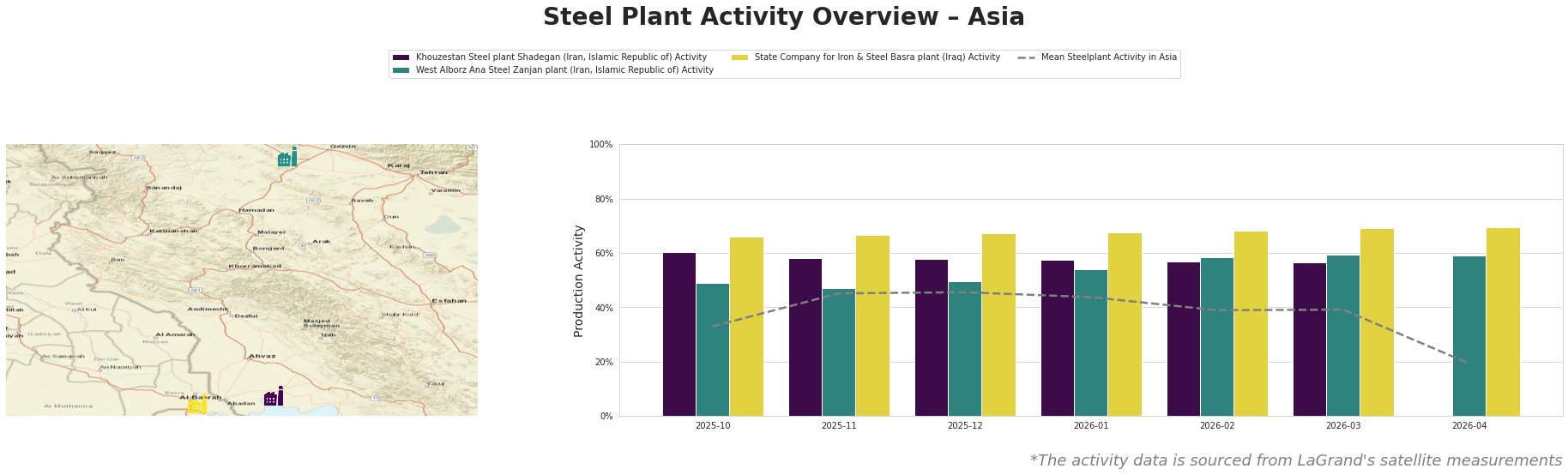
The Khouzestan Steel plant Shadegan registered a notable drop from 56% in March to an unmeasured activity level in April, attributable to extensive damage from military actions detailed in “Iran steel supply unlikely to benefit from ceasefire.” Comparatively, the West Alborz Ana Steel Zanjan plant sustained stable operations at 59% but remains impacted by overall geopolitical risks without any significant gain from the ceasefire. State Company for Iron & Steel Basra showed the only increase to 70% activity but lacks direct ties to the ongoing Iranian conflicts, indicating a distinct operational dynamic unaffected by Iran’s issues.
Potential supply disruptions are imminent particularly for semi-finished steel products as Khouzestan’s closure directly constrains available materials, supporting the advice to closely monitor shipping updates. Steel buyers should strategically stock up on inventories from stable suppliers like the State Company for Iron & Steel Basra, leveraging their higher activity levels relative to their Persian counterparts.
With no immediate price alleviation expected from Iran’s ceasefire, combined with rising energy costs and ongoing risks in regional transit, strategic procurement should prioritize securing alternative sources while engaging in preemptive hedging against fluctuations in the semi-finished steel markets.