


From the Field to the Dashboard – Built by Experts, for Experts.
Discover What's Really Happening in the Steel Industry
Use the AI-powered search engine to analyze production activity, market trends, and news faster than ever before.
Try the Free AI Search EnginePositive Momentum in Iranian Steel Market Amidst Geopolitical Developments
Recent geopolitical tensions have positively influenced steel production activity in Iran, as evidenced by satellite observations and emerging news. The articles “Iran says Lavan refinery attacked despite ceasefire” and “Trump defends concessions to Iran” frame the backdrop of increased negotiations following the U.S.-Iran ceasefire, impacting industrial output levels. Satellite data show a stark decline in activity at significant steel plants, influenced by these developments.
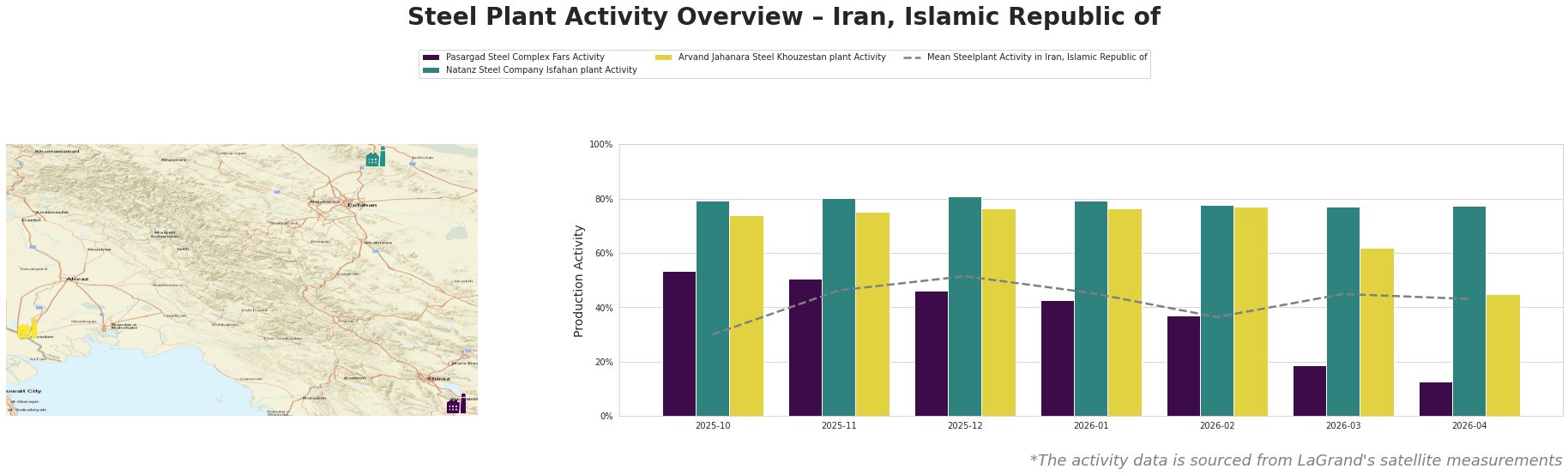
The data highlights a notable decrease of 6.2% in mean steel plant activity from March to April, primarily driven by Pasargad Steel Complex Fars, which suffered a dramatic drop from 19.0% to 13.0%—a 31.58% decline. The disconnect with geopolitical news is evident as the “Trump offers 2-week ceasefire to Iran” announcement occurred in close proximity to this downturn, suggesting external pressures likely affected operational capabilities.
The Natanz Steel Company Isfahan and Arvand Jahanara Steel Khouzestan plants showed more stable performance with activity levels at 77.0% and 45.0%, respectively. Natanz has consistently executed above the mean steel activity, indicating resilience amid geopolitical strains, whereas Arvand saw a more moderate decline, echoing potential supply chain uncertainties.
Potential supply disruptions may stem from the observed decline in Pasargad’s capabilities, influencing clients reliant on semi-finished and rolled steel products for construction and automotive sectors. Such disruptions may necessitate strategic adjustments in inventory management among buyers.
For steel procurement professionals, it is prudent to monitor developments closely around U.S.-Iran negotiations, which can markedly affect supply logistics. Given the fluctuating activity levels, buyers are advised to assess inventory levels and act decisively in procurement, especially for the products sourced from Pasargad, potentially exploring alternative suppliers as geopolitical dynamics evolve. Keeping informed about ongoing negotiations and regional developments will enable proactive management of supply chain risk.