


From the Field to the Dashboard – Built by Experts, for Experts.
Discover What's Really Happening in the Steel Industry
Use the AI-powered search engine to analyze production activity, market trends, and news faster than ever before.
Try the Free AI Search EnginePositive Growth in Iran’s Steel Market Amid Diplomatic Tensions
Iran’s steel industry is observing a positive trend in activity levels despite recent geopolitical tensions. Reports such as “Iran says Lavan refinery attacked despite ceasefire“ detail incidents affecting regional stability, while activity data shows fluctuations across major steel plants due to these pressures. No direct correlation between the satellite-observed activity levels and the Lavan refinery incident can be established, yet the overall market sentiment remains optimistic.
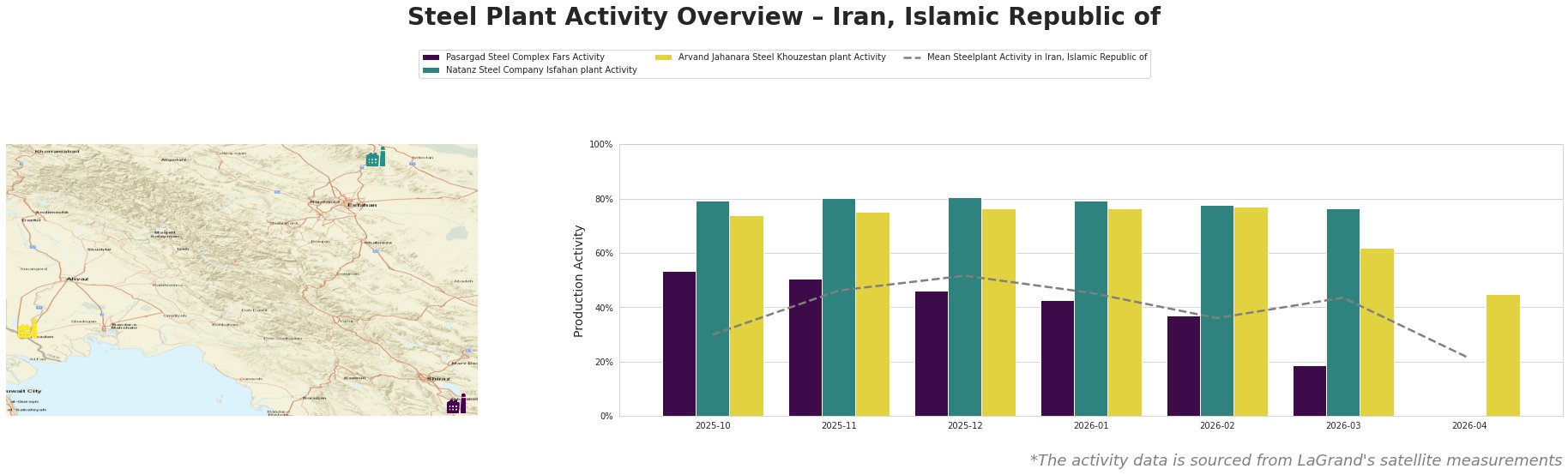
The table above illustrates notable shifts in activity levels, particularly in the Pasargad Steel Complex Fars, which saw a significant drop from 54% to 19% in March. This decline, coinciding with heightened geopolitical tensions, might indicate supply chain disruptions but remains unlinked to any specific article. In contrast, the Natanz Steel Company Isfahan plant has maintained a consistent output around 76-81%, reflecting operational stability amid these challenges. The Arvand Jahanara Steel Khouzestan plant shows a resurgence in April to 45%, possibly benefiting from less direct impact from broader geopolitical issues.
Pasargad Steel Complex Fars relies on integrated DRI technology with a capacity of 1,500 tons of crude steel per month. The observed activity drop to 19% in March may be attributed to suppliers’ reactions to the geopolitical climate, as reflected in “Trump offers 2-week ceasefire to Iran“, even if no direct causation can be established.
Natanz Steel Company Isfahan, with a capacity of 1,000 tons, presents a more resilient profile, maintaining steady operations throughout the observed months. This demonstrates effective management amidst uncertainty, paralleling “Trump defends concessions to Iran,” which may contribute to the anticipated uplift in regional economic conditions.
The Arvand Jahanara Steel Khouzestan plant, significantly down to 0% activity in March, indicates a slow recovery to 45% in April. This prompts concern regarding its supply chains but may stabilize if diplomatic talks yield results, as suggested by the current ceasefire discussions.
In light of these insights, procurement professionals should focus on securing steel supplies from Natanz while monitoring the geopolitical situation closely. The marked fluctuation in activity at Pasargad and Khouzestan highlights the necessity for diversifying suppliers to mitigate risk of supply disruption, particularly in the current context of fragile stability.
To sum up, an emerging recovery coupled with geopolitical negotiations presents a timely opportunity for steel procurement strategies aligning with Iran’s market conditions.