


From the Field to the Dashboard – Built by Experts, for Experts.
Discover What's Really Happening in the Steel Industry
Use the AI-powered search engine to analyze production activity, market trends, and news faster than ever before.
Try the Free AI Search EngineEuropean Steel Market Report: Positive Growth Amidst Increased Activity in Key Plants
Recent developments in the European steel market indicate a very positive sentiment, driven by significant activity increases in March 2026. The news articles “Australia increased its exports of iron ore by 14% m/m in March“ highlight a recovery in raw material availability, which is crucial for steel production. However, no direct correlation can be established between this and changes in specific European plants.
Recent Monthly Activity Trends
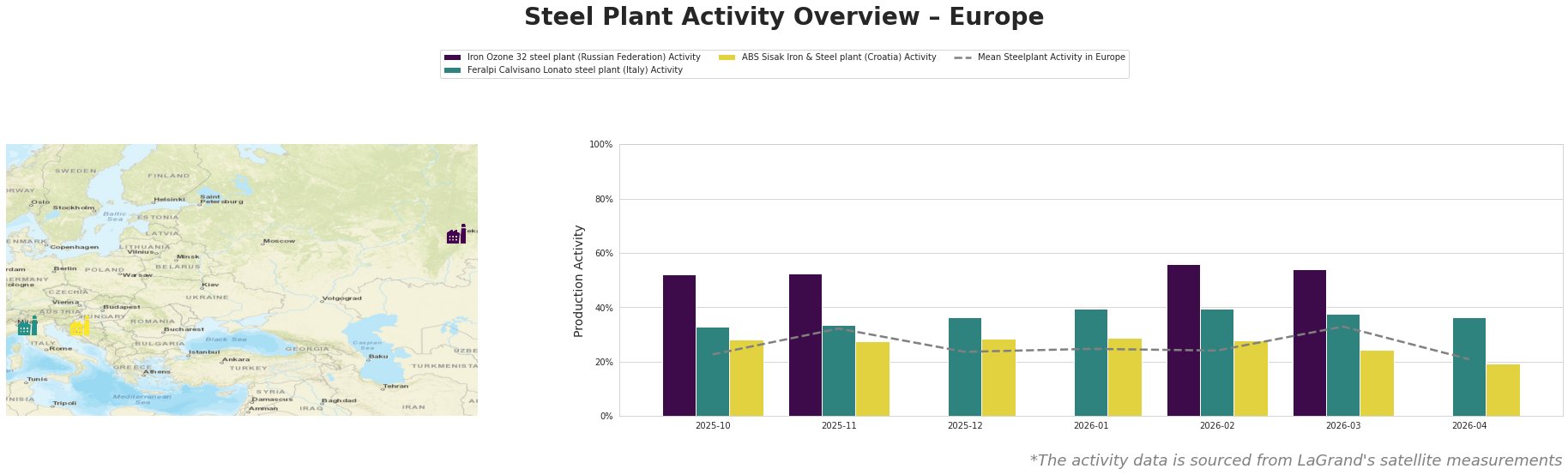
Steel plant activity experienced notable fluctuations, particularly at the Iron Ozone 32 steel plant, which peaked at 56% activity in February 2026, but decreased to 54% in March. Feralpi Calvisano Lonato exhibited stability around 36% in March, while ABS Sisak fell to 24%. Overall, the mean activity increased from 24% in February to 33% in March, emphasizing a rebounding trend, albeit slightly lower again in April at 21%.
Iron Ozone 32 Steel Plant
Located in Sverdlovsk, this plant reported peaks of 56% in February but saw a slight reduction to 54% in March. This decrease aligns with a broader trend across Europe. The activity drop does not correlate with any specific news about iron ore, suggesting local operational challenges rather than raw material supply.
Feralpi Calvisano Lonato Steel Plant
Situated in Italy, this plant’s activity remained consistent with peaks at 40% in January and a return to 36% in April. The stability in operation suggests efficient management practices. While affected by broader market trends, no linked events explain these specific activity levels.
ABS Sisak Iron & Steel Plant
In Croatia, this facility experienced a decline from 28% in February to 24% in March and then further down to 19% in April. This declining trend reflects operational challenges not directly tied to the recent increases in iron ore exports, showing a need for procurement teams to evaluate local factors influencing productivity.
Market Implications
The observed increase in iron ore exports from Australia bolsters confidence in raw material availability, essential for ongoing steel production. Buyers should monitor procurement strategies closely, particularly for the Iron Ozone 32 and Feralpi plants, where activity trends suggest potential supplier instability. In contrast, the declining activity at ABS Sisak warrants immediate attention to mitigate risk in sourcing strategies.
- Recommended action: Steel buyers should consider securing contracts with suppliers from the Feralpi plant as activity remains consistently within baseline ranges, ensuring reliable production amidst potential disruptions at ABS Sisak.
By integrating these insights, decision-makers can better navigate the European steel market, capitalizing on the positive growth environment while safeguarding against localized supply risks.