


From the Field to the Dashboard – Built by Experts, for Experts.
Discover What's Really Happening in the Steel Industry
Use the AI-powered search engine to analyze production activity, market trends, and news faster than ever before.
Try the Free AI Search EngineSteel Market in Asia Faces Downturn Amid Geopolitical Tensions and Decreasing Plant Activity
The steel market in Asia is exhibiting a Very Negative sentiment as geopolitical uncertainties and declining plant activities continue to affect production levels. Significant developments reported in the articles “Trump threatens Iranian power plants“ and “Trump orders pause in Iran strikes as talks open“ correspond to observable activity declines at major steel plants in the region. These tensions have complicated the supply chain dynamics, impacting steel pricing and availability.
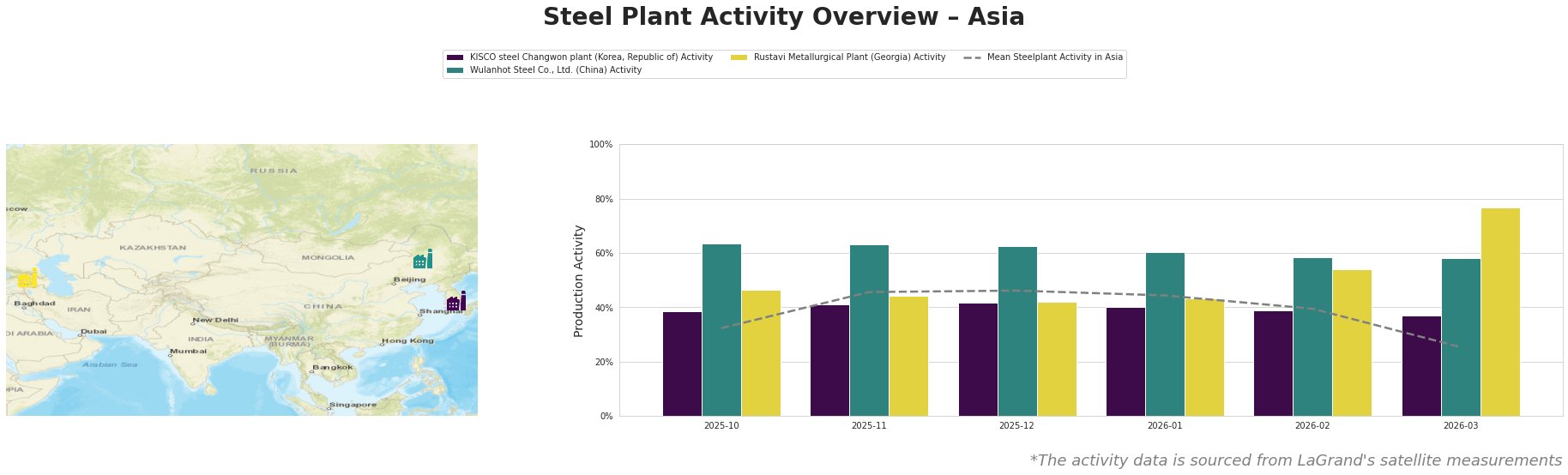
KISCO steel Changwon plant (Korea) is currently reflecting a downward trajectory with its activity decreasing from 41.0% in November to 37.0% in March 2026, amidst ongoing regional tensions as outlined in “Trump threatens Iranian power plants.”
Wulanhot Steel Co., Ltd. (China) has maintained a relatively stable output, fluctuating between 58.0% to 63.0% over the last six months, though potential disruptions loom as geopolitical factors escalate. In contrast, the Rustavi Metallurgical Plant (Georgia) shows a notable increase from 42.0% in December to 77.0% in March, suggesting resilience despite broader market challenges. There’s no explicit connection to the discussed news articles indicating why this increase might relate to ongoing geopolitical tensions.
The activity levels across these plants have lowered collectively with a mean decrease from 46.0% in November to a sharp drop of 25.0% in March 2026, aligning with a trend of cautious market sentiment informed by the aforementioned tensions.
Potential supply disruptions are increasingly evident. Specifically, if the geopolitical situation escalates, KISCO steel could face operational delays impacting its rebar and forging output necessary for construction and infrastructure projects. Steel procurement professionals should consider diversifying their supplier bases to mitigate risks associated with potential Iranian sanctions as tensions persist, particularly following Trump’s various threats to military action against Iranian facilities, which may hinder overall steel supply chains involving the region.
To manage these risks effectively, it is advisable for steel buyers to secure advanced procurement agreements and inventory levels while monitoring updates on geopolitical developments closely. The procurement strategy should strive to ensure that supply remains robust in light of the fluctuating activity levels observed and potential regional instability.