


From the Field to the Dashboard – Built by Experts, for Experts.
Discover What's Really Happening in the Steel Industry
Use the AI-powered search engine to analyze production activity, market trends, and news faster than ever before.
Try the Free AI Search EngineEuropean Steel Market Sentiment Plummets: Severe Activity Declines Amid Supply Constraints
Recent developments in Europe highlight a very negative sentiment in the steel market, driven by geopolitical events impacting steel plant activities. Notable articles, such as “Europe distillate pricing beyond last Mideast arrivals” and “UK clears US to use bases for Hormuz defensive strikes,” indicate significant supply issues that are trickling down to the steel industry, with satellite data showing pronounced declines across key facilities.
In March 2026, the activity level at the Donetsksteel Metallurgical Plant recorded only 19%, a substantial drop from a prior peak of 32% in November 2025. This could correlate with increased geopolitical instability in the region, as suggested by the UK clears US to use bases for Hormuz defensive strikes article, which outlines escalating threats to maritime shipping routes critical for resource distribution. The Kurum International Elbasan steel plant also displayed a stagnation, maintaining a modest activity of 55%, consistent over recent months, suggesting potential stagnation in operations and limited responsiveness to external demand shifts. Similarly, the Lebedinsky GOK DRI Plant registered a gradual decline to an activity level of 49%, down from 56%, highlighting potential curtailments driven, at least in part, by the overarching crisis impacting logistics and supply chains.
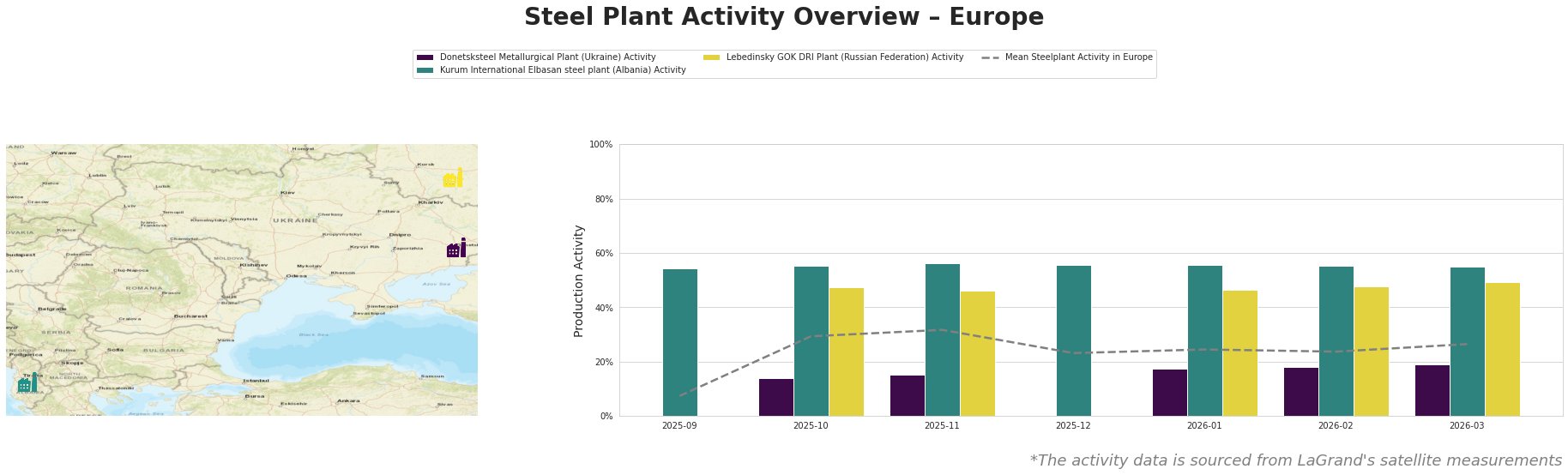
The Donetsksteel plant, primarily producing pig iron, is seriously impacted, reflecting external uncertainties and exacerbated by regional conflicts, as no clear path to resource acquisition or export availability is indicated. Meanwhile, Kurum International Elbasan’s steady activity suggests resilience but indicates a troubling stagnation that might not sustain over time amidst insufficient demand escalation.
Given these vulnerabilities, steel buyers should consider immediate procurement strategies to lock in materials and avoid potential future shortages. Engagement with suppliers at the Kurum plant and assessment of alternative sourcing options, such as looking to untapped production at the Lebedinsky GOK DRI Plant, could provide respite against escalating costs and supply disruptions resulting from ongoing geopolitical tensions, as reflected in the “Corpus Christi crude exports up since start of war” report. This situation highlights the need for vigilance and proactive adjustments within procurement strategies against a backdrop of uncertainty in resource availability due to external conflicts.