


From the Field to the Dashboard – Built by Experts, for Experts.
Discover What's Really Happening in the Steel Industry
Use the AI-powered search engine to analyze production activity, market trends, and news faster than ever before.
Try the Free AI Search EngineEurope’s Steel Industry Faces Declining Activity Amid Negative Market Sentiment
Steel activity across Europe continues to decline, driven by multiple factors contributing to a negative overall market sentiment. Notable reports, including “Australia establishes fuel supply taskforce“ and “Six fuel shipments to Australia cancelled: Minister,” highlight volatility in energy supply that may extend to global markets, potentially impacting steel production.
Recent satellite data indicates a troubling trend in steel plant activity levels, reflecting these concerns.
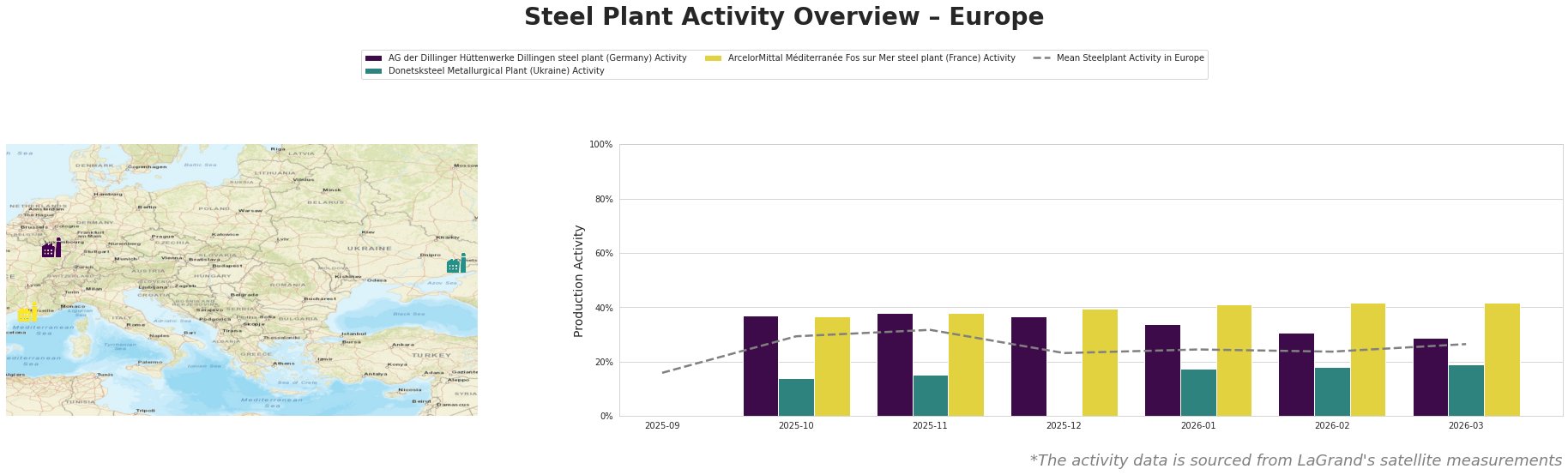
AG der Dillinger Hüttenwerke Dillingen (Germany) experienced fluctuating activity, peaking at 38% in November 2025, before declining to 29% by March 2026. This decline may reflect slower industrial demand in conjunction with rising energy costs, as highlighted in “Australia extends subsidy plan for refiners to 2030“.
Donetsksteel Metallurgical Plant (Ukraine), with historical dependence on external energy supplies, reported activity levels significantly disrupted, unable to stabilize above 19% in March 2026. This trend mirrors broader geopolitical risks impacting energy markets, notably linked to “Six fuel shipments to Australia cancelled: Minister.”
ArcelorMittal Méditerranée Fos sur Mer (France), while showing a higher peak at 42%, has only managed to maintain consistent activity at lower levels recently. This stagnation signals possible overcapacity or market saturation issues that reflect the pervasive market sentiments noted across recent articles.
The analysis indicates potential supply disruptions, particularly for the Dillinger plant, which may face procurement challenges linked to fluctuating energy input costs. Steel buyers should anticipate potential variability in steel costs and plan inventories accordingly, focusing on securing contracts with plants exhibiting stable or increasing activity to mitigate disruptions. Regular assessments of energy and raw material supply chains will be essential in this uncertain environment.