


From the Field to the Dashboard – Built by Experts, for Experts.
Discover What's Really Happening in the Steel Industry
Use the AI-powered search engine to analyze production activity, market trends, and news faster than ever before.
Try the Free AI Search EnginePositive Steel Market Outlook in Europe Amid Geopolitical Tensions
Recent evaluations of steel plant activity levels across Europe signal a positive momentum in the market despite challenges posed by geopolitical tensions, particularly those related to the Strait of Hormuz. The news articles “UK weighs Trump request to help reopen strait of Hormuz“ and its updates detail ongoing discussions among UK and allied leaders regarding maritime security. These developments correlate with an overall increase in steel production activities in Europe as manufacturers brace for potential supply disruptions.
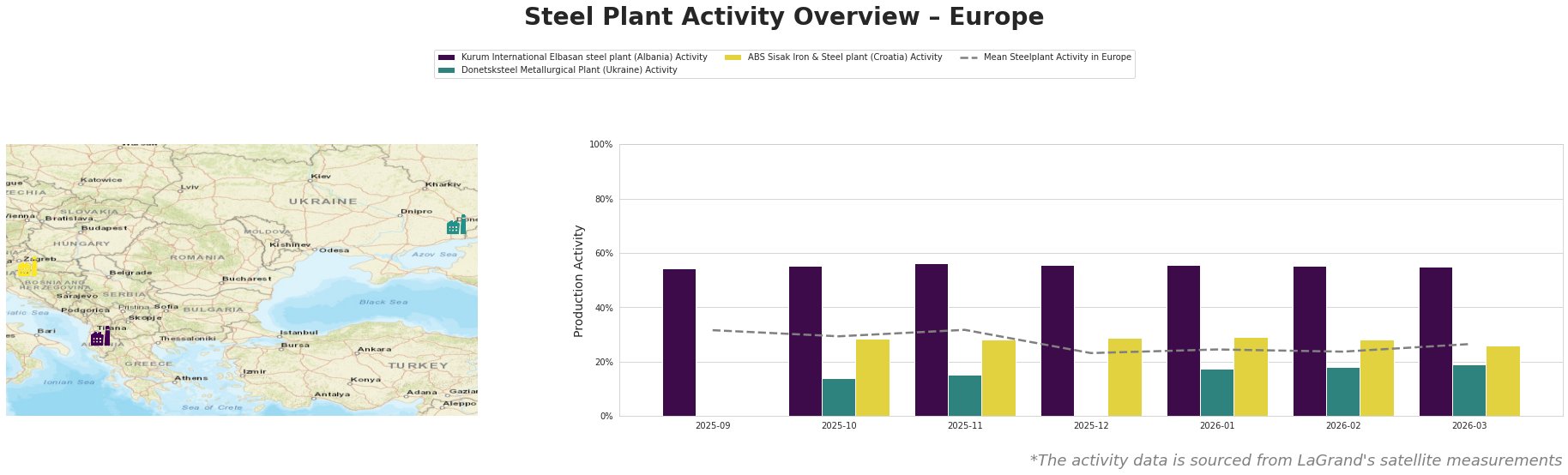
The Kurum International Elbasan steel plant remains robust with a steady 55% activity level, indicating resilience amid regional instability. Its capacity for crude steel production through electric arc furnaces facilitates consistent supply, supporting the market. In contrast, the Donetsksteel Metallurgical Plant showcases phased activity increases, noted by a rise from 14% in October 2025 to 19% in March 2026. This aligns with a cautious optimism regarding stability in supply chains.
The ABS Sisak Iron & Steel plant in Croatia reflects variable levels, peaking at 29% in December, followed closely by 28% in February and March. Despite the lack of explicit links to the recent news articles, this pattern recommends monitoring as procurement decisions are made.
Given the current geopolitical climate and fluctuations in steel plant activity, steel buyers should consider:
– Increasing inventory for long-lead projects to mitigate risks of supply disruptions from the Donetsksteel facility, as production remains uncertain amidst ongoing regional tensions.
– Establishing strategic relationships with EU-based suppliers like Kurum International, which demonstrate stable activities, to ensure a reliable supply chain.
– Investing in risk management strategies to address potential delays or reduced outputs influenced by industry-wide tension, as highlighted by Trump’s request to safeguard crucial maritime routes.
Such actionable insights will allow procurement professionals to navigate the European steel market effectively through the current landscape.