


From the Field to the Dashboard – Built by Experts, for Experts.
Discover What's Really Happening in the Steel Industry
Use the AI-powered search engine to analyze production activity, market trends, and news faster than ever before.
Try the Free AI Search EngineQatar Steel Market Outlook: Activity Plummets Amid Rising Geopolitical Tensions
The steel market in Qatar is currently facing significant challenges, driven by escalating geopolitical tensions as highlighted in the articles “Trump threatens South Pars as Qatar LNG plant hit again“ and “Qatar’s Ras Laffan comes under attack: Update 2.” The missile attacks on the Ras Laffan industrial complex have resulted in adverse effects on the operational environment, reflected in recent satellite observed activity data.
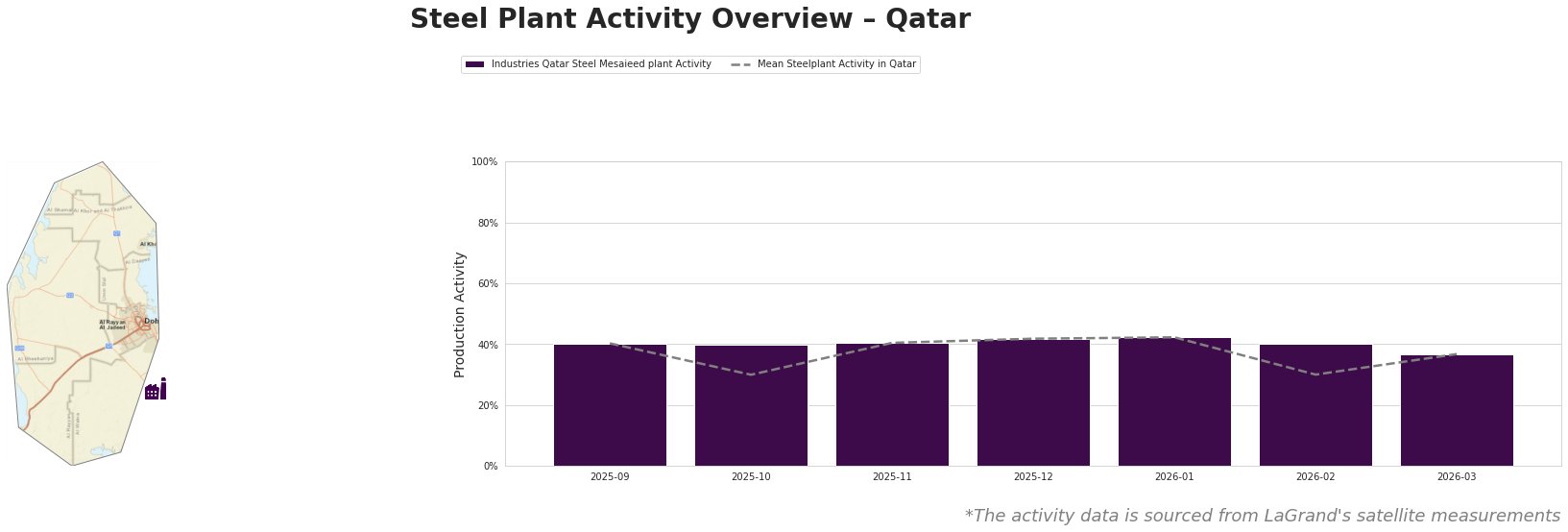
The activity levels show a worrying trend, with the mean activity across steel plants dropping to 30.0% in February 2026 and only slightly recovering to 37.0% by March 2026. Notably, the Industries Qatar Steel Mesaieed plant maintained a stable 42.0% from December 2025 to January 2026 but has since dropped to 37.0% in March 2026. This indicates a general decline in operations, potentially linked to the damage caused by recent missile strikes and ongoing geopolitical uncertainties.
The Industries Qatar Steel Mesaieed plant, integrating DRI and EAF technologies, is capable of producing 2.575 million tons of crude steel annually. The recent drop to 37.0% activity in March correlates with reported threats and attacks that have disrupted the local supply chain, specifically the missile strike detailed in “Qatar’s Ras Laffan comes under attack: Update.” Although there were no direct injuries reported, the escalation of tensions leaves buyers with concerns over the supply of raw materials and finished goods.
Given the significant reduction in activity levels and the ongoing risks highlighted by the news, procurement strategies should prioritize sourcing materials from more stable regions to mitigate potential supply disruptions. Buyers should also consider adjusting contract terms to account for volatility and increase inventories to ensure they remain insulated against sudden shortages.