


From the Field to the Dashboard – Built by Experts, for Experts.
Discover What's Really Happening in the Steel Industry
Use the AI-powered search engine to analyze production activity, market trends, and news faster than ever before.
Try the Free AI Search EngineChina’s Steel Market Report: Neutral Sentiment Amid Decreased Production and Stability Strategies
China’s steel industry is currently navigating a neutral market sentiment, reflected in reduced production levels as outlined in multiple reports. Notably, “China reduced its steel output by 3.6% y/y in January–February“ and “China has committed to reducing its steel production capacity by 2026“ indicate a cautious approach to production amid economic uncertainties. Activity data corroborate this decrease, showcasing a 3.6% reduction in production during early 2026, with ongoing pollution control measures and economic strategies contributing to these trends.
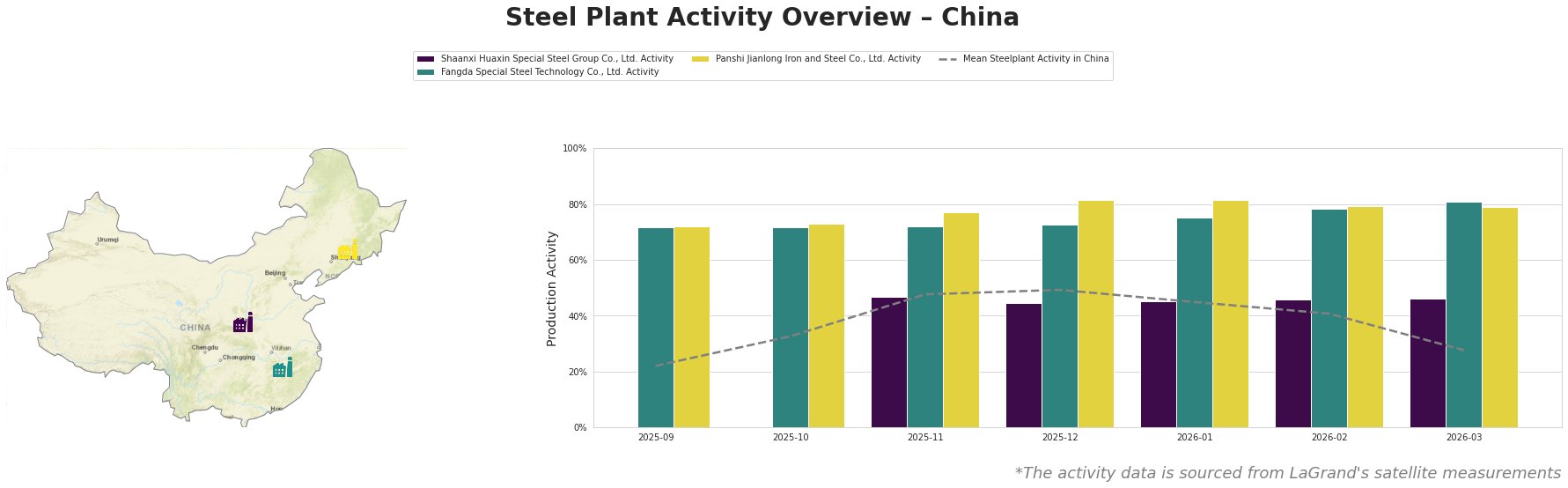
The activity metrics reveal significant fluctuations in plant operations. Shaanxi Huaxin Special Steel Group has shown a decline in activity to 46% by March 2026, which aligns with the production contraction underscored in “China reduced steel production by 3.6% in January-February.” In contrast, Fangda Special Steel Technology has demonstrated resilience, peaking at 81% activity in March 2026, showcasing a relatively stable operation despite market conditions. However, Panshi Jianlong Iron and Steel Co., Ltd. saw its activity decline from a high of 82% in December 2025 to 79% by March 2026.
The production strategies highlighted in “China has committed to reducing its steel production capacity by 2026” support a long-term transition aimed at stabilizing the market, yet they introduce potential supply chain disruptions in the near term as output constraints become effective.
Given the recent declines in exports by 8.1% and a significant 21.7% drop in imports during early 2026, procurement professionals should strategically assess their sourcing strategies. Immediate recommendations include:
-
Diversify Supply Sources: Engage with Fangda Special Steel Technology due to its sustained operational performance, possibly securing favorable contracts amidst dwindling supply from other plants.
-
Monitor Regulations and Policies: Stay informed on new capacities and production limitations following the government’s commitment to capacity capping. This proactive approach can mitigate risks associated with sudden supply shortages.
-
Adjust Inventories: As highlighted in “China steel market muted after Two Sessions meeting,” consider adjusting inventory strategies in anticipation of potential supply delays as the market stabilizes amidst policy shifts.
In conclusion, navigating the current market landscape requires an informed approach leveraging data and adapting procurement strategies to align with changing conditions in the Chinese steel industry.