


From the Field to the Dashboard – Built by Experts, for Experts.
Discover What's Really Happening in the Steel Industry
Use the AI-powered search engine to analyze production activity, market trends, and news faster than ever before.
Try the Free AI Search EngineEuropean Steel Market Struggles Amid Rising Prices and Weak Demand
Weak demand and rising prices characterize the European steel market, as highlighted in multiple reports including European HRC prices edge higher, with import constraints continuing to drive sentiment and European HRC prices are rising, but weak demand and virtually zero imports are holding back activity. Recent satellite data indicates a decline in activity levels at several plants, aligning with the market’s overall sentiment.
Measured Activity Overview
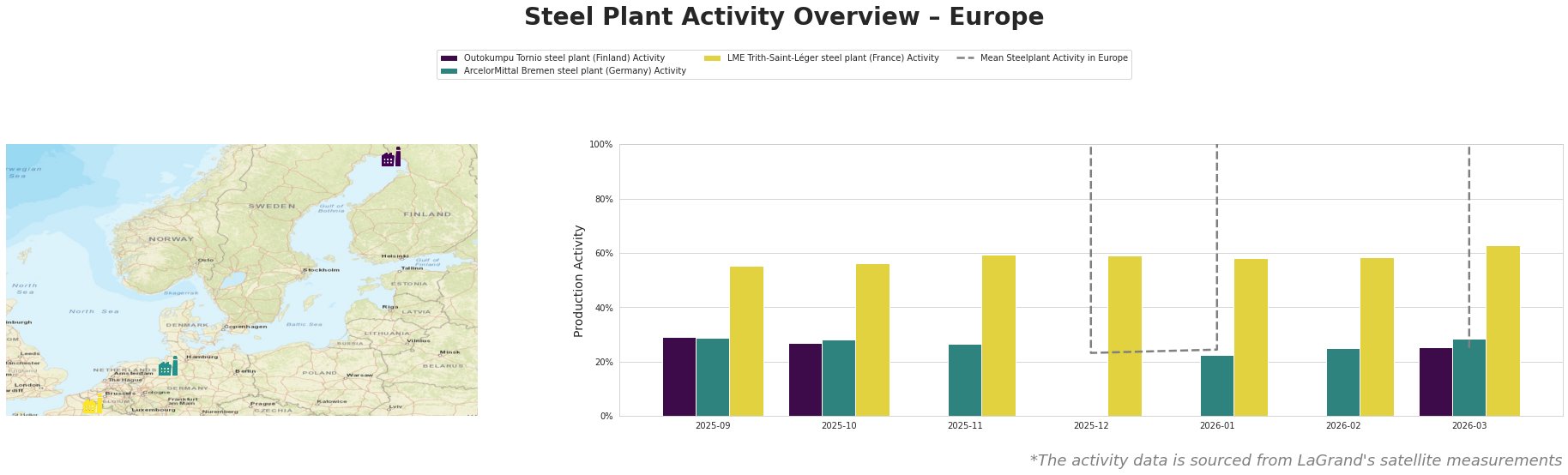
Activity at the Outokumpu Tornio steel plant in Finland declined severely, dropping to 25% by March 2026 from levels above 27% in prior months. This aligns with sentiments in the article European HRC prices continue to rise as factories reduce production amid deteriorating import forecasts, which suggests a strategic limit on production. ArcelorMittal Bremen has maintained a more stable activity around 25-28%, still facing challenges in meeting buyer expectations as indicated by European HRC prices edge higher, but weak demand and near-dead imports curb activity. In contrast, LME Trith-Saint-Léger showcased a peak activity of 63% in March, possibly reflecting localized demand but facing a slow import market.
Recommended Procurement Actions
Given the activity trends and the outlined concerns regarding weak demand and virtually zero imports, procurement professionals should consider:
– Prioritize Contract Negotiations: Secure contracts with Northern European producers like ArcelorMittal Bremen while focusing on prices not exceeding €700 per tonne, as the market sentiment leans towards tempered demand and concern over oversupply.
– Monitor Import Dynamics: Keep abreast of developments related to EU safeguard measures, particularly post-conflict scenarios, which could influence import availability and regulations.
– Adjust Sourcing Strategies: Explore additional local sources, possibly from LME Trith-Saint-Léger, which has shown improved activity. Consider approaching suppliers for more flexible negotiations to counteract price surges as cited in the articles.
In summary, while prices are increasing, the disjointed demand landscape suggests a cautious approach in procurement strategies to mitigate long-term supply risks and cost inflation amidst ongoing geopolitical uncertainties.