


From the Field to the Dashboard – Built by Experts, for Experts.
Discover What's Really Happening in the Steel Industry
Use the AI-powered search engine to analyze production activity, market trends, and news faster than ever before.
Try the Free AI Search EnginePositive Trends in Asian Steel Market: Plant Activity and Strategic Insights
The Asian steel market is experiencing a revitalized surge in activity levels, particularly as geopolitical tensions affecting oil supply channels become clearer. Recent developments outlined in EU foreign ministers to discuss Hormuz options today highlight potential risks to oil and fertilizer supplies, prompting heightened scrutiny on steel production activities across the region. This context aligns with observed increases in operational levels at key steel plants.
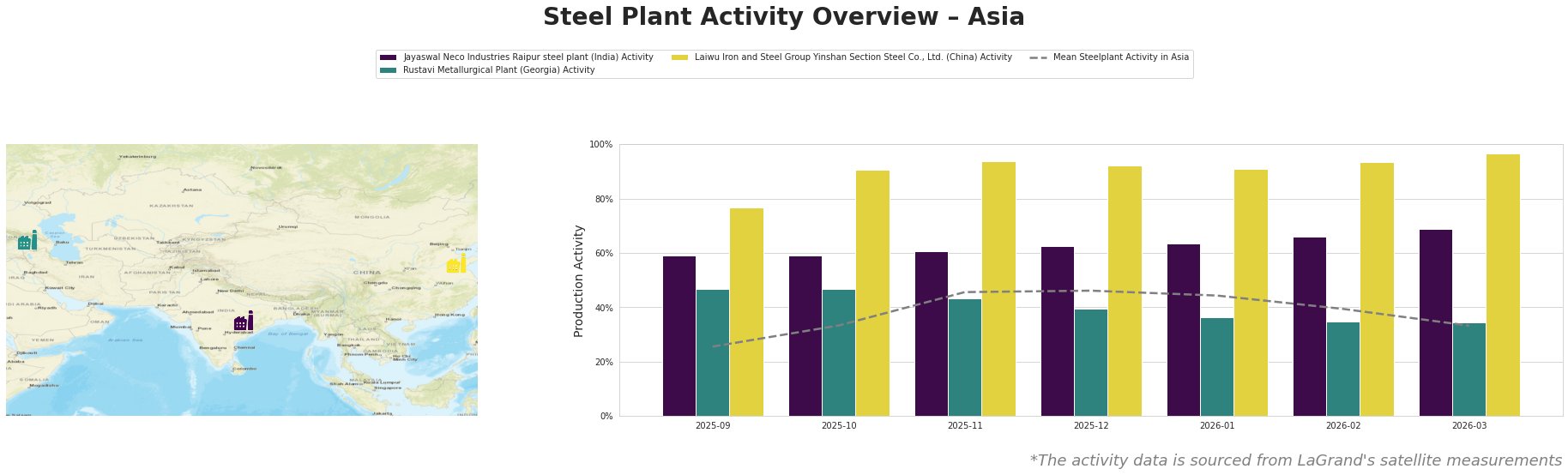
Jayaswal Neco Industries in Raipur, India, showcased solid growth with activity rising to 69% by March 2026, driven by robust demand for crude and finished rolled products. This uptick contrasts the mean activity across Asian plants, which sits at 33%. The links to news flow from EU foreign ministers to discuss Hormuz options today, as ongoing geopolitical apprehensions concerning oil supplies have catalyzed heightened activity in strategic industries like steel.
Meanwhile, the Rustavi Metallurgical Plant in Georgia remains stable, reflecting activity at 35%, consistent with the regional average yet down from 47% in September. This stagnation may point to supply chain pressures without a clear coinciding news event correlating to these changes, suggesting internal operational factors may be at play.
On the other hand, Laiwu Iron and Steel Group Yinshan in China reached an impressive peak of 97% in March 2026, highlighting its strategic role in the region, attributed to its large production capacity and sophisticated production methodologies. These elevated levels further align with anticipated shifts noted in Barclays’ projections of rising crude oil prices due to potential disruptions; maintaining robust operational rates helps mitigate the ripple effects of supply shortages.
The implications of these observed activity levels suggest potential supply disruptions across Asia could arise, particularly if tensions near the Strait of Hormuz escalate, affecting crude supplies crucial to steel production. Analysts and steel buyers should consider making proactive procurement decisions, especially for products from high-activity plants like Jayaswal Neco and Laiwu Iron and Steel, to capitalize on their operational efficacy and hedge against potential supply chain volatility stemming from geopolitical uncertainties.