


From the Field to the Dashboard – Built by Experts, for Experts.
Discover What's Really Happening in the Steel Industry
Use the AI-powered search engine to analyze production activity, market trends, and news faster than ever before.
Try the Free AI Search EngineAsia Steel Market Outlook: Significant Activity Decline Linked to Regional Conflict Disruptions
The steel market in Asia is facing a substantial downturn, predominantly influenced by the escalating tensions in the Gulf region. Recent incidents such as Vessels attacked near strait of Hormuz: Update and Tanks damaged in Omani port attack: Sources have created significant disruptions in maritime trade and, indirectly, in steel production capabilities across the region. Notably, satellite activity data shows a sharp decline in operational levels at several key steel plants.
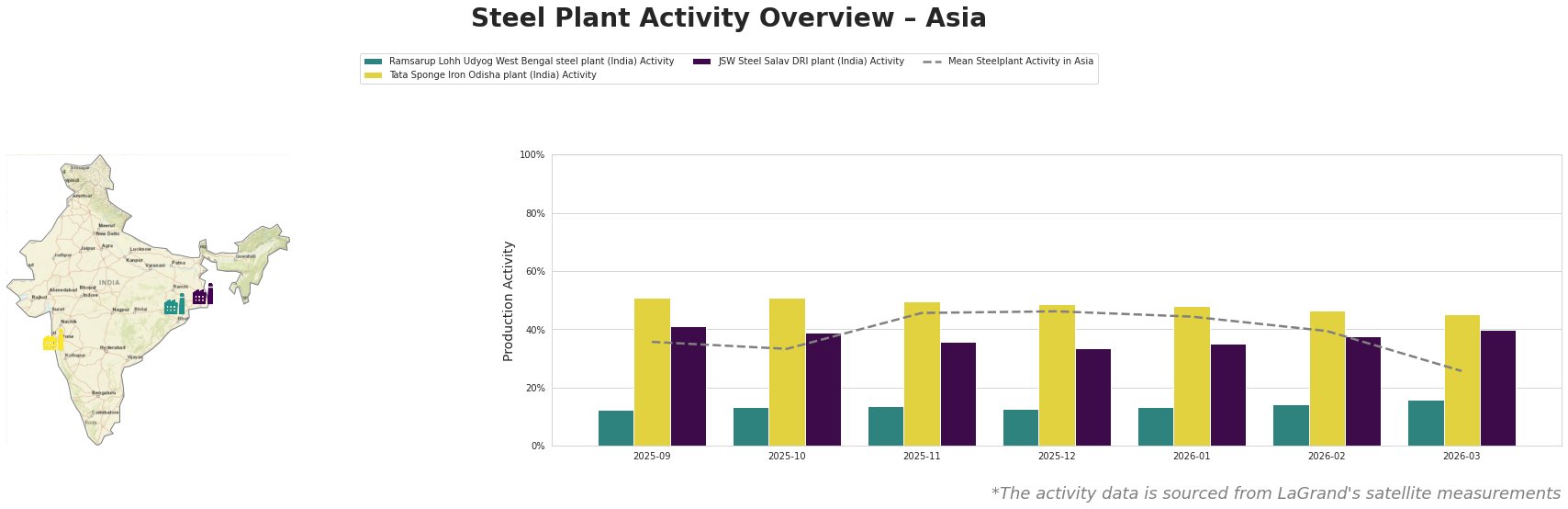
The overall steel mill activity in Asia dropped significantly to 26.0% by March 2026, indicating a pronounced downturn in output. For instance, the JSW Steel Salav DRI plant experienced a 13.0% decline from January to March, representing significant operational challenges possibly correlated with shipping disruptions referenced in Hormuz traffic restart ‘not too long away’: Wright.
The Ramsarup Lohh Udyog West Bengal and Tata Sponge Iron Odisha plants also faced reduced performances, with activity levels remaining stagnantly low around 12-16%, possibly indicating a hesitance to ramp up production amid geopolitical instability, although direct links to the news articles could not be established.
In summary, the interconnectedness of the regional conflict and trade disruptions directly influences steel production activity within Asia, as seen in the agreed decline of plant outputs.
Potential Supply Disruptions:
– The Ramsarup Lohh Udyog and Tata Sponge Iron plants in India may encounter persistent supply constraints, diminishing their ability to fulfill orders throughout early 2026.
– Shipping navigability through the Strait of Hormuz may disrupt operations further, especially as noted in the Vessels attacked near strait of Hormuz: Update which highlights ongoing threats to maritime security.
Recommended Procurement Actions:
– Steel buyers should prioritize alternative sourcing strategies away from the affected regions, especially for products produced at the impacted plants to mitigate risks related to supply delays.
– Establishing contracts or purchasing agreements with suppliers from regions less affected by geopolitical instability, potentially within Southeast Asia or domestic channels that remain operational, is advisable.
– Keenly monitor global shipping updates and potential military resolutions, as these could influence future supply chains and pricing strategies in the short to medium-term outlook.
By structuring procurement strategies around these actionable insights, buyers can better navigate the current landscape of vulnerabilities and uncertainties within the Asian steel market.