


From the Field to the Dashboard – Built by Experts, for Experts.
Discover What's Really Happening in the Steel Industry
Use the AI-powered search engine to analyze production activity, market trends, and news faster than ever before.
Try the Free AI Search EngineAsia Steel Market Report: Crisis Intensifies Amid Activity Decline
The steel market in Asia is currently facing a very negative sentiment driven by ongoing geopolitical tensions, particularly due to the Middle East conflict, which has indirectly impacted steel production activities across the region. Recent articles like War pushes crude tankers to record highs illuminate the cascading effects of heightened oil prices and disrupted shipping routes, contributing to a downturn in steel plant activity, as evidenced by satellite data.
The data reflects significant shifts, with mean steel plant activity plummeting from 40% in February 2026 to just 18% in March 2026. Notably, Wugang Zhongjia Iron & Steel Co., Ltd. maintained its activity at 71%, but both Tata Sponge Iron Odisha plant and JSW Steel Salav experienced declines, with JSW’s activity dropping to 40% and the Tata plant hovering at 45%—a drop that aligns with rising costs of raw materials and logistic uncertainties.
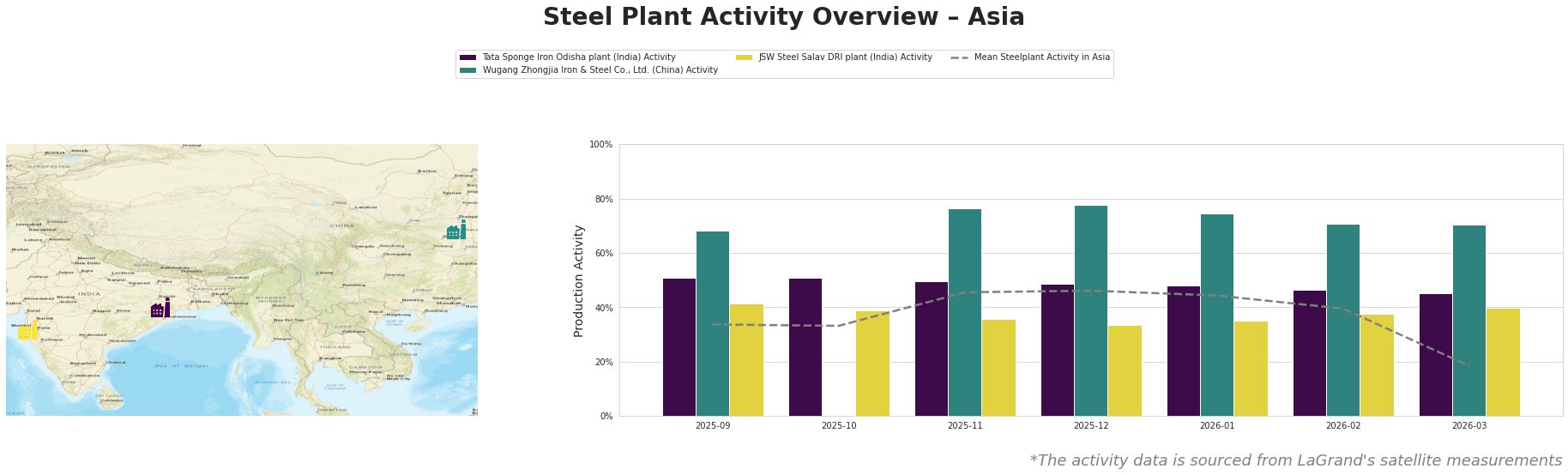
At the Tata Sponge Iron Odisha plant, activity levels have declined by 1% to 45%, a drop that reflects the overall supply chain disruptions highlighted in the Strait of Hormuz squeeze lifts US crude, freight article. Similarly, the JSW Steel Salav plant saw a decrease to 40%, correlating with the broader trend of uncertainty, especially as raw material prices surge.
Wugang Zhongjia Iron & Steel Co., Ltd. maintains stable activity at 71%, showing resilience amidst these tumultuous market conditions, but strategic procurement should still take into account potential supply chain vulnerabilities stemming from the geopolitical climate and rising transport costs.
For steel buyers and analysts, it is crucial to secure supply agreements promptly due to the anticipated supply disruptions highlighted by the European propane hit fresh high on US-Iran war article. The elevated shipping costs and unstable market conditions necessitate a cautious approach, particularly for procurement operations heavily reliant on international suppliers. Consider focusing on domestic or closer supply chains to mitigate risk. Additionally, it may be strategic to explore alternatives to DRI products as global markets adjust in response to tumultuous freight and energy costs from the ongoing Middle Eastern crises.