

From the Field to the Dashboard – Built by Experts, for Experts.
Discover What's Really Happening in the Steel Industry
Use the AI-powered search engine to analyze production activity, market trends, and news faster than ever before.
Try the Free AI Search EngineSlovenia’s Steel Market Surge: €78 Million Aid and Increased Activity Drive Positive Sentiment
In Slovenia, the steel market sentiment is notably positive, driven by recent government interventions and observed increases in steel plant activities. The European Commission’s approval of the €78 million Slovenia aid scheme to offset indirect ETS electricity costs has directly influenced energy-intensive industries, including steel production. Reports such as “EU approves €78 million Slovenia aid scheme to offset indirect ETS electricity costs“ and similar articles have highlighted the ongoing support for these sectors, indicating a robust response to rising electricity prices, which has helped stabilize operations.
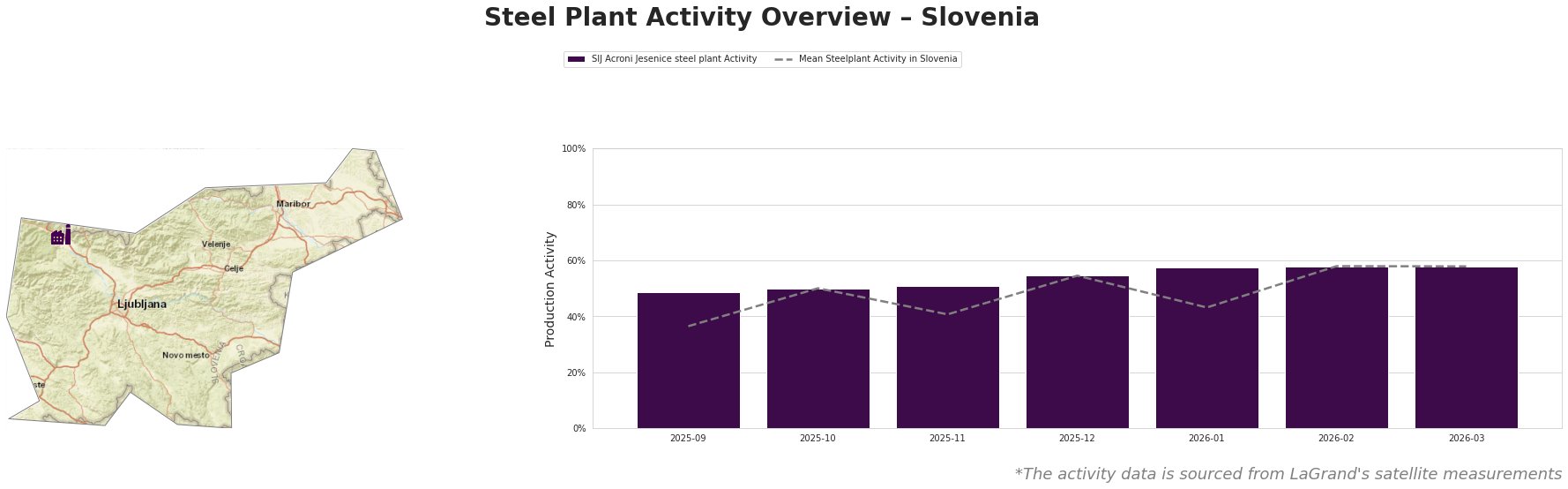
The recent statistics showcase a notable rise in activity levels at the SIJ Acroni Jesenice steel plant, which peaked at 58% in January and February 2026. It has remained stable at this level through March 2026. The average activity across Slovene steel plants rose to 58% by the end of March, suggesting a significant upward trend that aligns with the approval of the aid scheme.
The SIJ Acroni Jesenice plant, operating under an electric arc furnace (EAF) process with a crude steel capacity of 726,000 tons, has benefitted from this positive climate. The aid scheme explicitly covers the indirect emission costs for energy-intensive operations, potentially allowing the plant to bolster its productivity and reinvest in advanced production technologies. This reinforcement aligns with the plant’s targets of maintaining efficient operations, crucial for complying with new energy regulations.
The approval of the aid scheme significantly ensures operational stability, thus averting disruptions in supply. Steel buyers should consider leveraging this moment to secure procurement agreements with local plants like SIJ Acroni Jesenice, as availability appears stable. Given the industry’s recovery and ongoing support from regulatory bodies, buyers should aim for long-term commitments that may offer security against future pricing volatility driven by electricity costs. As per the mercantile implications arising from “The EU has approved a 78 million euro assistance program for Slovenia to offset indirect electricity costs ETS“, securing a reliable source within Slovenia may yield strategic advantages.