


From the Field to the Dashboard – Built by Experts, for Experts.
Discover What's Really Happening in the Steel Industry
Use the AI-powered search engine to analyze production activity, market trends, and news faster than ever before.
Try the Free AI Search EnginePositive Momentum in Asia’s Steel Market: Satellite Data Highlights Growth Amidst Strategic Developments
In Asia, the steel market sentiment is currently positive, driven by notable activity changes observed in key plants across the region. The recent news article “Thailand’s Gulf Energy seeks more April LNG“ indicates a broader increase in industrial demands, which aligns with satellite-observed rises in plant activities, suggesting a strong demand trajectory for steel as energy costs stabilize.
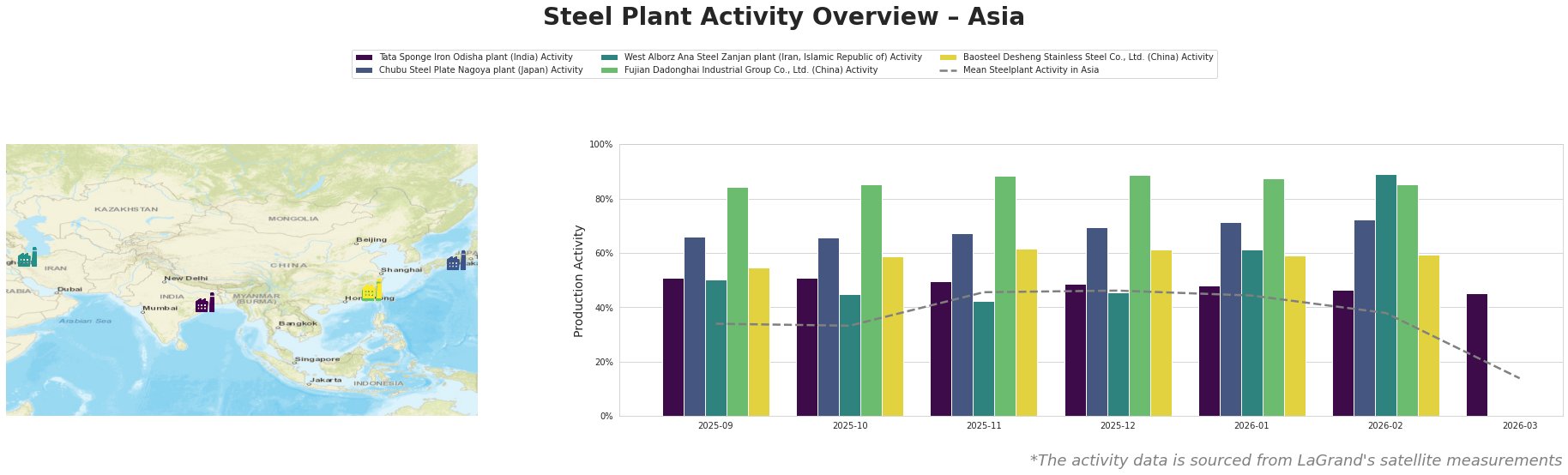
Tata Sponge Iron’s activity slightly decreased to 46% in February, aligning with the STC’s sensitivity to fluctuating energy prices reported in “Thailand’s Gulf Energy seeks more April LNG.” Chubu Steel Plate maintained its activity at 72%, indicating resilience amidst market fluctuations. West Alborz Ana Steel’s rise to 89% in February represents a strategic response to growing regional demands, though a direct linkage to reported LNG purchases is speculative. Fujian Dadonghai remained strong at 85%, hinting at robust integration with steady coal supply ensuring operational efficiency, although no direct news connection was identified.
Overall, the mean steelplant activity experienced a sharp decline to 14% in March, a drastic drop from previous months. This may suggest potential supply disruptions or seasonal adjustments rather than a universally declining trend across individual plants.
Procurement actions for steel buyers should focus on engaging with plants exhibiting strong activity levels, notably Fujian Dadonghai and West Alborz, which are positioned to fulfill demand effectively given their recent operational robustness. Keeping an eye on LNG pricing fluctuations and their potential impacts on plant operations will also be crucial for buyer strategies. Given the strategic nature of LNG supply in the region, a proactive approach in negotiations and planning can capitalize on favorable production conditions while mitigating risks associated with any anticipated disruptions in steel supply.