


From the Field to the Dashboard – Built by Experts, for Experts.
Discover What's Really Happening in the Steel Industry
Use the AI-powered search engine to analyze production activity, market trends, and news faster than ever before.
Try the Free AI Search EngineNegative Outlook on Africa’s Steel Market: Suspensions and Activity Declines
Recent events in the African steel market highlight a growing concern around supply stability, notably linked to the article “Rio Tinto suspends iron ore production at Simandou in Guinea“. The recent suspension of operations following safety incidents has affected output expectations. This is exacerbated by satellite data indicating a significant decline in activity levels across various steel plants in the region.
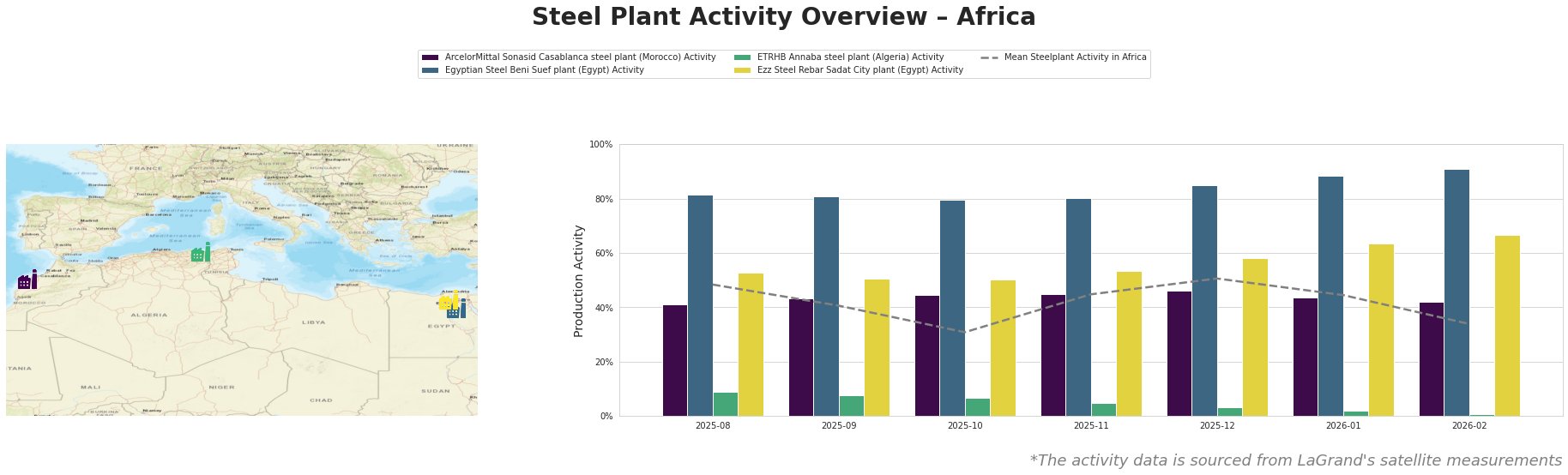
The ArcelorMittal Sonasid Casablanca plant has demonstrated fluctuating activity, peaking at 46% in December 2025 but falling to 42% by February 2026. This drop correlates with the overall negative sentiment in the iron ore market, particularly after the incidents reported at the Simandou mine.
The Egyptian Steel Beni Suef plant has maintained relatively high activity levels, peaking at 91% in February 2026, suggesting resilience amidst broader market turmoil. However, the suspensions and operational disruptions at Simandou could strain raw material supply chains, affecting future outputs.
The ETRHB Annaba plant, with its activity declining from 9% to 1% between August 2025 and February 2026, indicates severe operational challenges, potentially exacerbated by uncertain raw material supply due to Rio Tinto’s suspension of operations. No direct connections were established between these developments and specific articles, although the broader context may play a role.
The Ezz Steel Rebar Sadat City plant faced a decline from 64% to 67% during the same period, reflecting attempts to stabilize operations but also signaling possible future challenges related to consistent feedstock availability.
These observed trends across key facilities showcase a worrying decline in activity levels directly linked to external operational disruptions at primary iron ore sources like Simandou.
Procurement strategies should account for potential supply disruptions, especially in sourcing iron ore. Steel buyers are advised to:
- Re-evaluate supply chain vulnerabilities: Given the implications of Rio Tinto’s ongoing investigation into the Simandou mine operations, buyers should diversify their sourcing strategies to mitigate risk.
- Monitor pricing and supply trends: Stay updated on production forecasts from regional steel producers affected by iron ore shortages.
- Engage with suppliers frequently: Strengthen relationships and communication lines with suppliers to receive timely updates on availability and pricing projections, particularly for plants indicating instability in activity levels.